




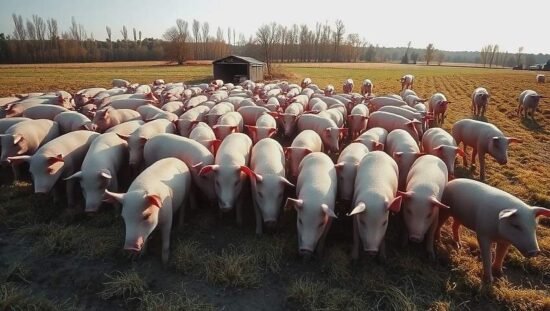
Preliminary figures released by the German Federal Statistical Office (Destatis) reveal a complex and potentially concerning trend in Germany’s agricultural sector, particularly concerning its livestock populations. As of November 3, 2025, Germany held 21.5 million pigs across 15,220 farms, marking a significant shift from previous years and sparking debate about the future of the industry.
While the pig population itself saw a 2.8% increase (+575,800 animals) compared to the May 2025 survey and a 0.9% rise (+196,300 animals) year-on-year, this growth is juxtaposed with a continuing and accelerating, consolidation of farms. The number of operations hasn’t remained static; a significant 2.7% decline (-430 farms) was registered compared to November 2024 and a dramatic 40.8% reduction (-10,500 farms) has occurred over the last decade. This highlights a worrying trend towards fewer, larger operations, which carries implications for farm viability, regional economies and the potential loss of agricultural diversity.
The overall pig population, however, remains considerably smaller than in 2015, down by 22.3% or 6.2 million animals. This decrease, coupled with the dwindling farm numbers, directly demonstrates the increasing scale of operations, with the average number of pigs per farm rising from roughly 1,100 in 2015 to over 1,400 in 2025. This intensification raises concerns about animal welfare standards and the environmental impact of concentrated animal agriculture.
Interestingly, the data paints a nuanced picture within the pig sector. While the number of fattening pigs decreased by 6.4% (626,200 animals) year-on-year, the number of piglets and young pigs increased substantially, rising 8.1% (+809,800 animals). This surge in younger animals could signal a long-term recovery in the sector, but also introduces complexities in managing and supplying feed and potentially raises further questions of future market fluctuations. The increase in breeding sows (+19,300 animals) also suggests a planned expansion of production.
The situation within the cattle and dairy farming sectors presents a contrasting, though equally troubling, narrative. While numbers appear relatively stable overall – 10.5 million head of cattle, including 3.6 million dairy cows – a long-term decline is evident. The total cattle population is down 16% since 2015, a trend further compounded by a sharp contraction in the number of dairy farms, reducing by nearly 50% over the past decade. The declining number of dairy farms specifically – a reduction of 10.9% year-on-year – threatens the livelihoods of small-scale farmers and the viability of rural communities.
This data inevitably fuels the ongoing political debate surrounding agricultural subsidies, environmental regulations and the future of family farms in Germany. The continued consolidation of farms, evidenced by both the pig and dairy sectors, points to a growing imbalance in the agricultural landscape, potentially impacting food security, rural economies and government responsibilities toward supporting an increasingly concentrated industry. Further investigation is needed to understand the factors driving these trends and to implement policies that address the complex challenges facing Germany’s agricultural sector.