




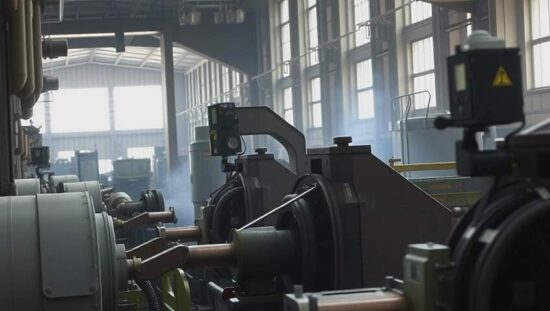
“Rheinmetall’s Automotive Supply Division Faces Potential Dismantling Amidst Acquisition Negotiations”
Rheinmetall, the German defense giant, is grappling with a complex situation surrounding the prospective sale of its automotive supply division, raising concerns about potential fragmentation and raising political questions about the company’s broader strategic shift. According to sources within the financial sector quoted by the Handelsblatt, the acquisition process is being driven by private equity investors who, crucially, see limited synergies between the division’s disparate business segments.
Specifically, the division, which encompasses technologies ranging from combustion engine components to sensor systems and drive-independent parts, is being viewed as structurally divisible. This assessment by potential buyers significantly increases the likelihood of a post-acquisition dismantling, with individual business units potentially being sold off to different investors following the initial deal’s completion, anticipated for the first quarter of 2026.
The deal’s valuation is also proving contentious. While initial estimates suggested Rheinmetall CEO Armin Papperger was seeking a price tag of around €1 billion, bids have reportedly landed in the €500 to €600 million range. This marked concession on Rheinmetall’s part highlights the investor’s perception of the division’s inherent lack of cohesion and potential for individual asset value.
Beyond the financial implications, the planned sale triggers a critical debate regarding Rheinmetall’s commitment to its civilian operations, particularly given the company’s aggressive pivot towards defense production. The potential retention of Mira GmbH, a Rheinmetall spin-off focused on autonomous driving technology, suggests that certain strategically valuable civilian capabilities might be spared from divestment.
Perhaps most concerning is the ambiguity surrounding the future of Rheinmetall’s civilian production facilities currently undergoing conversion into defense plants. The example of the Neuss facility, being repurposed to manufacture components for reconnaissance satellites and missile systems, underscores a broader trend. The question of whether these increasingly weaponized civilian sites will remain wholly within Rheinmetall’s possession or be partially transferred to the acquiring investor introduces a layer of operational and political uncertainty, potentially complicating the transition and raising questions about the long-term viability of the company’s dual-purpose activities. The move highlights the complexities of reconciling defense expansion with commitments to the broader German industrial base and workforce.