




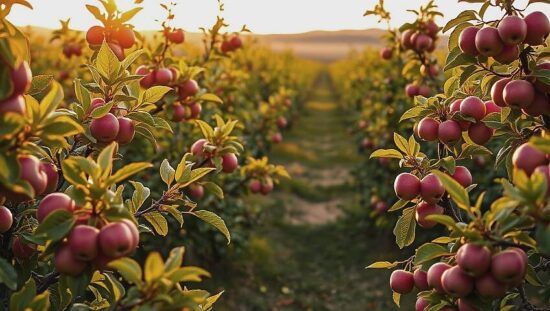
Germany’s apple growers are celebrating a record harvest year in 2025, a development with potential ramifications for the nation’s agricultural policies and market stability. Provisional data released Friday by the Federal Statistical Office (Destatis) indicates a remarkable 1.138 million tons of apples were harvested, exceeding even optimistic forecasts from August. This represents a significant 30.5% increase compared to the meager output of 2024 and 17.2% above the ten-year average.
The surge in apple production, while welcome for farmers, raises questions about the government’s role in managing agricultural surpluses and safeguarding farmer income. While 2018 saw a slightly higher yield, the current situation demands careful consideration, particularly given ongoing debates about subsidies and trade agreements.
The states of Lower Saxony/Hamburg and Baden-Württemberg are the pivotal regions driving this boom, accounting for 65.5% of Germany’s apple growing area and nearly three-quarters of national production. Lower Saxony/Hamburg, known for the renowned “Altes Land” apple-growing region and Baden-Württemberg reported particularly striking increases surpassing the ten-year average, suggesting localized factors may be at play – potentially favorable weather conditions or improvements in cultivation techniques.
The vast majority (75.5%) of the apple harvest is earmarked for sale as fresh fruit (“table apples”), while 23.7% is destined for processing industries, including juice, preserves and cider production. However, the relatively small proportion of fruit lost to storage and processing losses (0.8%) also underscores the efficiency of German agricultural infrastructure.
The bumper apple year follows a similarly positive outlook for plum and sloe production, yielding 51,300 tons – also exceeding expectations and representing a 17.1% increase year-on-year. Rhineland-Palatinate demonstrated a staggering 40.5% increase in plum production, significantly outpacing the ten-year average.
Across all surveyed fruit yields, apples dominate at 88.6% of the 1.284 million ton total, while plums and sloes account for a comparatively small 4.0%. While the robust harvests signal prosperity for some, policymakers will need to address potential ramifications regarding pricing, export markets and the long-term sustainability of agricultural practices – especially in light of demands for reduced environmental impact and increased resilience to climate change. The significant regional disparities in production also necessitate a deeper investigative look at resource distribution and potential supports for farmers in less bountiful areas.