



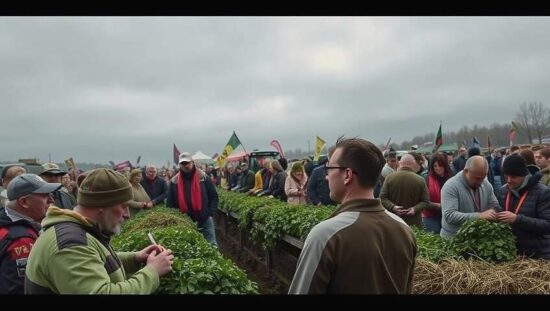
Brussels was brought to a standstill Thursday as tens of thousands of farmers, representing all 27 European Union member states, staged massive protests ahead of the final EU summit of the year. Estimates suggest around 10,000 demonstrators converged on the European Quarter, marking what agricultural lobby Copa-Cogeca has termed the largest farming protests seen in Brussels this century.
The demonstrations highlight a growing sense of frustration amongst European farmers, targeting a range of contentious policies emanating from Brussels. Protesters voiced strong opposition to proposed reforms of the Common Agricultural Policy (CAP), criticizing what they perceive as unacceptable cuts to the EU budget allocated to the sector. Furthermore, the demonstrations specifically aimed at what they characterized as unfair EU trade policies, fueling anxieties about the impact of agreements such as the planned Mercosur trade deal. Complaints also centered on excessive bureaucratic burdens imposed on agricultural businesses.
While the scale of the protest underscores the urgency of the farmers’ concerns, its timing is revealing. Agrarian issues are reportedly slated for a relatively minor role in the summit’s agenda, overshadowed by discussions surrounding the contentious use of frozen Russian assets to support Ukraine and the planned expansion of the EU. This disparity between the farmers’ demonstrated level of concern and the summit’s prioritization raises questions about the EU’s responsiveness to the crucial agricultural sector and its ability to address the anxieties of those who produce food for the continent.
Analysts suggest the scale of the demonstration pressures the EU to reassess its priorities and consider the potential consequences of neglecting the needs of European farmers, particularly as food security and rural stability become increasingly vital in a volatile global landscape. The protests serve as a stark reminder that political agendas, however urgent, cannot ignore the bedrock of European sustenance.