




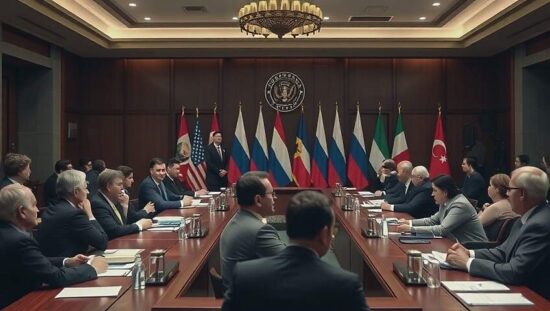
The European Commission President Ursula von der Leyen has intensified lobbying efforts ahead of the final EU summit this year, advocating for the expedited ratification of the controversial Mercosur trade agreement. Arriving at the summit in Brussels, von der Leyen framed the agreement as a crucial step toward bolstering Europe’s geopolitical strength and reducing critical dependencies, a sentiment echoed within the broader discussion of “geoeconomics” dominating the gathering.
Von der Leyen’s messaging centered on the perceived vulnerabilities exposed by current supply chain dependencies, arguing that a network of free trade agreements is paramount to achieving genuine global competitiveness. “We must eliminate excessive dependencies” she stated, positioning Mercosur – a trade bloc encompassing Argentina, Brazil, Paraguay and Uruguay – as a lynchpin in this strategy. The prospect of accessing a market of 700 million consumers and fostering trade with like-minded nations has been highlighted as a significant draw.
However, the push for Mercosur faces considerable resistance and raises pressing concerns. Environmental groups and several member states, particularly France, have vehemently opposed ratification, citing potential detrimental impacts on European agricultural producers and concerns over deforestation in South America, specifically within the Amazon rainforest. Critics point to insufficient environmental safeguards within the current agreement and express skepticism about Brazil’s commitment to sustainable practices under the leadership of President Lula da Silva.
Beyond the agricultural impact, political analysts question the strategic value of deepening trade ties with countries whose democratic credentials have, at times, been questionable. The agreement’s potential to further fragment the EU’s strategic autonomy and complicate its relationship with other trading partners has also been brought into the debate. The summit’s deliberations are expected to be contentious, as the pressure mounts to reconcile economic ambitions with environmental responsibility and geopolitical realities. A final decision remains elusive, with the prospect of further concessions and revisions to the agreement being heavily debated amongst EU leaders.