




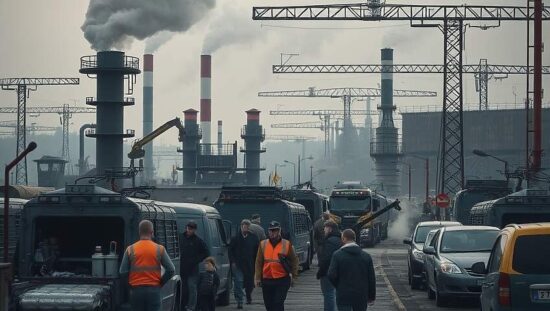
The German industrial landscape is facing a prolonged structural crisis, according to a stark warning issued by Peter Adrian, President of the Association of German Chambers of Industry and Commerce (DIHK). In an interview with the “Rheinische Post” Adrian painted a concerning picture of Germany’s economic performance, signaling a potential stagnation that demands urgent and bolder action from the federal government.
Since the COVID-19 pandemic, Germany’s economy has demonstrably failed to regain momentum. DIHK’s projections for the coming year anticipate a meager 0.7% growth rate, a figure that shrinks to a paltry 0.3% when accounting for the impact of reduced public holidays and the effectiveness of state infrastructure investment. This persistent slowdown, Adrian argued, is indicative of deeper, unresolved systemic issues.
Criticizing the current government’s response, Adrian asserted that existing reform initiatives are insufficient to address the scale of the challenges. He specifically pointed to overwhelming bureaucracy and escalating burdens on businesses operating within Germany as significant impediments to growth. The recent pension package, which is expected to further inflate wage-related costs, was singled out as a particularly concerning development. According to DIHK’s economic surveys, over half of German businesses now identify rising labor costs as a primary business risk.
The DIHK President’s call for social reforms is particularly pointed. He articulated a clear target: to reduce ancillary wage costs to 40% of gross salaries. This would necessitate, he suggested, linking the retirement age to life expectancy, a measure that, while potentially controversial, is deemed essential for restoring competitiveness. Adrian’s remarks represent a significant escalation in the ongoing debate surrounding Germany’s economic trajectory and place considerable pressure on Chancellor Scholz’s administration to adopt a more assertive and potentially disruptive reform agenda. The implications for Germany’s long-term economic stability and its role on the global stage are considerable.