




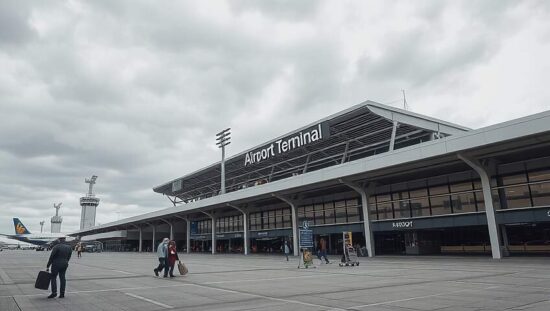
The planned modernization of the government terminal at Berlin Brandenburg Airport (BER) has spiraled into a cost overrun of staggering proportions, raising serious questions about governmental oversight and fiscal responsibility. Initial estimates from 2019 projected a minimum expense of €340 million, but newly released projections from the Federal Agency for Real Estate Tasks (BImA) now estimate costs reaching approximately €1.7 billion, with a potential worst-case scenario exceeding €2.5 billion.
The dramatic escalation in expenses is primarily attributed to the complete relocation of the German Air Force’s government flight operations to Schönefeld by 2038, alongside a significant expansion of the fleet. A decision made in March 2022, coupled with the acquisition of larger aircraft, has demonstrably increased the demand for parking spaces and sophisticated technical infrastructure. Furthermore, revised building codes and technical norms necessitate a dramatic increase in the terminal’s footprint, ballooning from an initial 304,000 square meters to an estimated 570,000 square meters.
The situation has drawn sharp criticism from taxpayer advocacy groups. Reiner Holznagel, President of the German Taxpayers’ Association, condemned the project as another instance of a federal prestige project losing control. “Again, a prestige project of the federal government is falling apart” he stated, highlighting concerns about the government’s ability to manage large-scale projects responsibly.
Holznagel further argued that the escalating costs are “in stark contradiction to the budgetary distress” currently facing the nation and demand an immediate halt to current planning. He advocated for a purely functional approach to government flight operations, warning against unnecessary and costly additions. The controversy underscores a broader debate regarding the prioritization of public funds and the role of extravagant infrastructure projects amidst challenging economic realities, leaving many questioning the value for taxpayers’ money.