




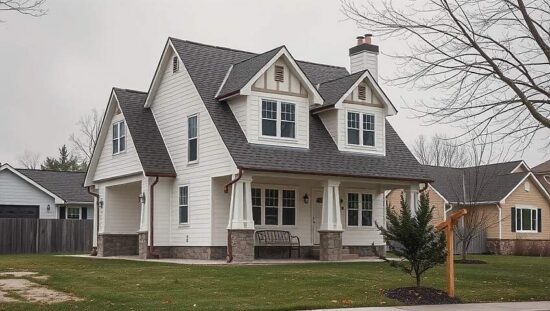
The German government’s renewed initiative to incentivize the construction of “EH55” energy-efficient homes has launched, but early indications suggest the program’s financial structure may not be as universally beneficial as initially portrayed. Interest rates for the newly offered subsidized loans are now set, revealing a complex system that risks disproportionately favoring larger construction companies while potentially deterring individual homeowners.
According to reports from banking sources published in the Handelsblatt, the effective interest rate for a 35-year loan with a ten-year interest rate fixation stands at 2.84 percent. A significantly lower 1.94 percent rate applies to loans with a shorter, ten-year term. While a reduction from the previous EH40 standard, the longer-term rates remain comparatively high, particularly for smaller-scale residential projects and independent builders.
The government has allocated a one-time budget of €800 million to facilitate these subsidized loans, available to both businesses and private individuals. Loans can reach up to €100,000 per housing unit, alongside earmarked grants for municipalities. This reintroduction of EH55 funding marks a shift from the previously promoted, more stringent and costly EH40 standard. EH55 buildings require only 55% of the energy consumed by standard housing, ostensibly offering a more achievable efficiency target.
However, critics are raising concerns that the loan structure, particularly the availability of longer-term financing, could predominantly benefit large construction firms capable of leveraging the subsidized funds for substantial developments. Individual homeowners, often facing tighter financial constraints, may find the longer-term interest rates prohibitive, effectively limiting their access to the program.
The reintroduction of the EH55 standard itself raises questions regarding the government’s energy efficiency strategy. While the lower standard is presented as a more accessible target, some industry experts argue it sacrifices substantial energy savings and may undermine Germany’s broader climate goals. The decision to prioritize accessibility over ambitious targets is likely to fuel debate within the ruling coalition and draw scrutiny from environmental advocacy groups.
Furthermore, the relatively modest €800 million allocation, while significant, may prove insufficient to meet the anticipated demand, potentially creating bottlenecks and delaying the program’s impact. Closely monitoring the uptake of the loans and their distribution across various project sizes will be crucial to assess the program’s true effectiveness and ensure it serves its intended purpose of widespread energy-efficient housing construction.