




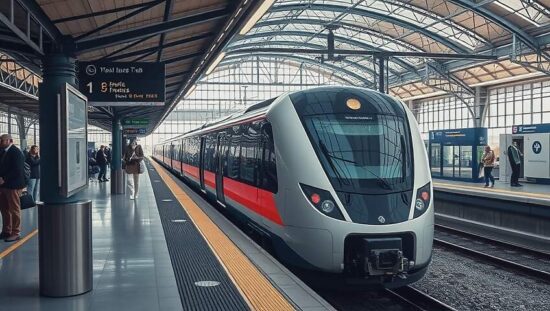
Flix Mobility, a significant player in European bus transport, is poised to aggressively challenge the dominance of Deutsche Bahn (DB) in Germany’s passenger rail market. The company announced Friday plans to deploy a fleet of 65 high-speed trains, manufactured by Spanish firm Talgo and currently contracted for projects in Denmark and Germany, exclusively within Germany, commencing operations in 2028.
This ambitious strategy, dubbed a “high-frequency network” represents a considerable escalation in the competition for passengers on Germany’s key rail corridors. Flix aims to establish itself as the second major rail network alongside the state-owned DB, promising comparable travel times and frequency. The company’s CEO, André Schwämmlein, explicitly linked the move to the recent unveiling of the federal Transport Minister’s rail strategy, suggesting political support for a more competitive landscape.
While Flix currently operates a smaller rail service, Flixtrain, the planned introduction of the Talgo 230 platform-based trains – capable of speeds up to 230 km/h and powered by Siemens Vectron locomotives – marks a significant leap in capability and capacity. In the interim, Flix intends to double its existing Flixtrain services in Germany over the next two years by introducing modernized carriages, aiming to immediately enhance passenger experience and increase service density.
The company’s message hinges on a pledge of affordability and a technologically superior product. Schwämmlein asserted that Flixtrain will be more accessible to consumers while simultaneously offering a “most attractive” railway offer through modern, cutting-edge trains.
However, this expansion isn’t without potential political complexities. DB, already facing scrutiny over its performance and pricing, will undoubtedly view Flix’s encroachment as a direct threat. While the Transport Minister’s strategy aims to foster competition, ensuring a level playing field and preventing potential market distortions will be crucial. DB’s access to infrastructure and potential legislative advantages remain significant hurdles for Flix’s success. The impact on smaller regional rail operators, often reliant on DB’s network, also warrants consideration. Ultimately, the success of Flix’s challenge will depend not only on the appeal of its offering, but also on the regulatory environment and the response from the established rail giant.