




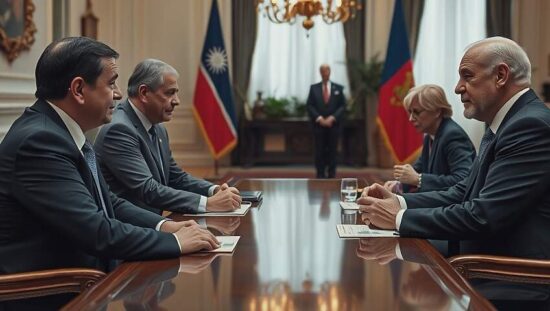
Following a hastily arranged meeting in Brussels Friday evening, German Chancellor Friedrich Merz, Belgian Prime Minister Alexander De Croo and European Commission President Ursula von der Leyen announced they are nearing a consensus on the contentious issue of utilizing frozen Russian assets to bolster Ukraine’s financial stability. While characterizing the outcome as a “mutually agreeable solution” deep-seated concerns, particularly from Belgium, remain a significant hurdle to a definitive resolution.
The proposed measure, which aims to allocate roughly €200 billion of frozen Russian assets – a significant portion managed by the Brussels-based financial clearinghouse Euroclear – to support Ukraine over the coming years, has ignited a political firestorm. Belgium, acutely aware of the potential legal ramifications stemming from Euroclear’s central role, has voiced strong reservations about assuming liability should Russia pursue legal action. The country fears being held responsible for potential repercussions arising from the utilization of assets under its jurisdiction.
Chancellor Merz acknowledged Belgium’s “undeniable concern” regarding the equitable distribution of risk amongst European states, emphasizing the need for any solution to directly address this central point. The urgency to provide Ukraine with vital financial aid, framed as “of central importance for the security of Europe” further accelerated the negotiations, prompting Merz to reschedule a pre-planned visit to Norway to participate in the Brussels discussions.
However, the announced proximity to a deal glosses over the complexities. Critics argue that the expedited timeline and political pressure to finalize the policy before the European Council meeting on December 18th risks circumventing thorough legal scrutiny. Concerns persist regarding the precedent this action sets for the sanctity of property rights and the potential for retaliatory measures from Russia. While the commitment to achieve a consensus is laudable, the fundamental question remains: can a legally sound and universally acceptable solution be forged that adequately shields European nations, particularly Belgium, from potential legal and financial fallout while simultaneously providing critical support to Ukraine? The European Council meeting will undoubtedly prove pivotal in determining whether these ambitions can be realized.