




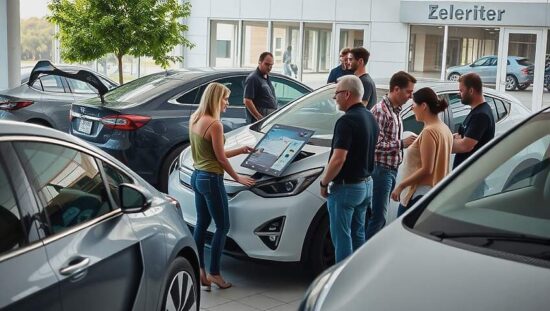
The German automotive retail sector anticipates a significant surge in electric vehicle (EV) sales following the government’s recently announced purchase premium scheme, but the projected benefits are shadowed by concerns over market distortions and looming long-term consequences. A market prognosis by the Central Association of German Automotive Retailers (ZDK), as reported by “Welt am Sonntag” estimates a jump of 160,000 to 180,000 additional battery-electric vehicle (BEV) and plug-in hybrid sales. The majority of this boost is expected to come from pure electric car purchases.
ZDK projects total sales of 1.1 million new BEVs and plug-in hybrids by 2026, including 300,000 BEVs destined for private consumers. Concurrently, they foresee a decline in internal combustion engine (ICE) vehicle sales, potentially decreasing by up to twelve percent. Overall, the association anticipates a slight increase in total passenger vehicle sales, reaching 2.95 million units – a near four percent rise.
However, the optimism regarding immediate sales increases is tempered by a growing apprehension within the retail sector concerning the scheme’s potential downsides. The purchase premium is predicted to exacerbate the already diminished resale values of EVs and depress lease return values, effectively creating a two-tiered market.
“We would have preferred the scheme to include younger, used EVs” stated VDK President Thomas Peckruhn. This omission raises concerns that the premium will predominantly benefit new car sales, potentially widening the gap between newer and older EVs and further depressing the residual values of used electric vehicles. Critics suggest the government’s intervention, while intended to stimulate adoption, risks creating artificial market forces that could ultimately destabilize the used car market and hinder the long-term viability of the EV transition. The focus on incentivizing new purchases also neglects the significant contribution used EVs could make to achieving environmental goals, particularly for budget-conscious consumers.