




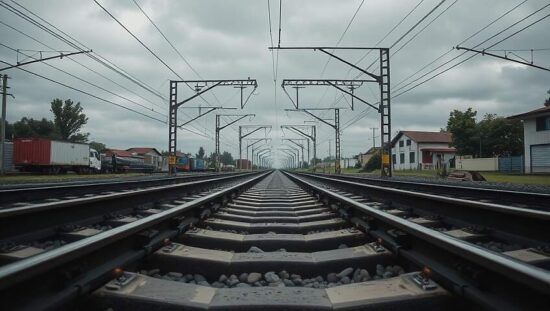
The German rail network, long plagued by chronic delays and widespread infrastructure deficiencies, may see incremental improvements in punctuality next year, according to Philipp Nagl, CEO of InfraGO, the division responsible for rail infrastructure at Deutsche Bahn. While cautiously optimistic, Nagl’s assessment underscores a deeper systemic failure to prioritize rail investment, a failure stretching back decades and now facing intense political scrutiny.
Speaking to “Der Spiegel”, Nagl highlighted the ongoing modernization of the crucial Hamburg-Munich corridor, projecting a significant boost to punctuality, potentially exceeding 70%, by mid-2026. This represents a tentative step towards meeting the ambitious targets set by Federal Transport Minister Patrick Schnieder (CDU), who aims for a minimum punctuality rate of 70% across the entire long-distance rail network by 2029. However, Deutsche Bahn board member Evelyn Palla has previously cautioned against expecting rapid or dramatic improvements, a sentiment that tempers the initial optimism.
Nagl attributes the painfully slow progress to fundamental missteps in past government policies. He argues that Germany’s enthusiastic investment in autobahn construction from the late 1960s dramatically outstripped comparable development of the nation’s rail infrastructure – a discrepancy only partially addressed with the later emergence of high-speed rail lines. While the “Aufbau Ost” (eastern reconstruction) program provided a relatively robust rail network in the east, the neglected western network has suffered from decades of deferred maintenance.
He further criticizes previous administrations for what he describes as a pattern of neglecting essential infrastructure upgrades, prioritizing short-term cost-cutting measures at the expense of long-term stability. “Our predecessors indulged in a final round of exploitation of the existing rail infrastructure and cut back on investments” Nagl stated, suggesting that valuable 10 to 15 years were squandered.
Beyond the physical state of the tracks, Nagl points to a critical lack of financial continuity as a key contributing factor. Emphasizing the need for long-term commitment to rail infrastructure, he draws a parallel to ancient pyramid construction, arguing that a “high culture” like rail necessitates consistent, multi-generational stewardship. He contrasts Germany’s inconsistent funding cycles, often disrupted by political shifts and alternating policy priorities, with the unwavering commitment to rail investment found in his native Austria, where financing has remained stable regardless of governing party since the early 1990s. This points to a fundamental challenge for the German government – reconciling political expediency with the long-term investment required to truly revitalize the nation’s rail network and meet the growing demands for sustainable transportation.