




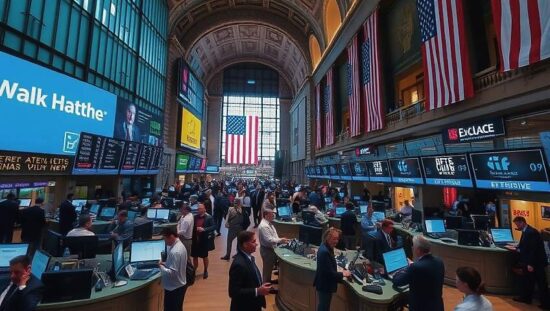
German equities opened Thursday with a positive trajectory, fueled by expectations of imminent interest rate cuts from the US Federal Reserve. The DAX index climbed to approximately 23,835 points by 9:30 am, a 0.6% increase from the previous day’s closing level. Automotive giants Mercedes-Benz, Porsche Holding and Volkswagen led the gains, while BASF, Airbus and RWE followed.
The rally is largely attributed to the lingering impact of a weaker-than-expected US private sector employment report released Wednesday. “The probability of a Fed rate cut next week is now priced in at 98%” stated Thomas Altmann of QC Partners. With crucial official labor market data and inflation figures slated for release “after” the upcoming policy meeting, Altmann suggests few remaining obstacles stand in the way of a rate reduction. He notes that this anticipation has provided a significant boost to equity markets recently.
However, a critical divergence is emerging between the performance of the DAX and its Wall Street counterpart. While the S&P 500 approached a new record high Wednesday, needing only a fraction of a percentage point to reach it, the DAX remains nearly four percent behind. This reflects a broader concern over the relative underperformance of European markets. Year-to-date in the second half of the year, the DAX is currently in negative territory, a stark contrast to the impressive ten percent gain seen in the S&P 500.
This gap raises questions about the strength of the European economic recovery and the ability of the DAX to capitalize on prevailing market optimism. Some analysts suggest the difference reflects varying economic fundamentals and the impact of geopolitical uncertainties impacting European firms more acutely.
The Euro also weakened slightly Thursday morning, trading at $1.1666, reflecting a corresponding dollar rate of €0.8572. Concurrently, oil prices rose, with Brent Crude fetching $62.91 per barrel, a 0.4% increase, adding a layer of complexity to the macroeconomic landscape and potentially influencing future investment decisions.