



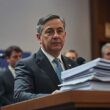
The call for utilizing frozen Russian Central Bank assets to support Ukraine has intensified, spearheaded by CDU leader Friedrich Merz, sparking renewed debate over European sovereignty and the scope of sanctions against Moscow. In a guest commentary published in the “Frankfurter Allgemeine Zeitung”, Merz argued that deploying these funds isn’t merely an act of assistance for Ukraine but a necessary demonstration of resolve aimed at dissuading further Russian aggression.
Merz’s proposition directly challenges the current reliance on external powers to dictate the fate of assets legally seized within European jurisdiction and denominated in European currencies. He contends that genuine European sovereignty demands an assertion of control over these decisions, freeing the EU from dependence on other nations’ dictates concerning the resources of an aggressor state. His argument represents a stark departure from the cautious approach adopted by some European capitals.
Beyond the immediate financial benefit to Ukraine, Merz frames the move as a symbolic declaration of European independence, emphasizing the bloc’s right to shape its own destiny within the continent. He insists the utilization of frozen assets aligns with international law and existing commitments.
However, the proposal is not without its complexities. Merz acknowledged the legitimate concerns voiced, particularly from Belgium – the host nation for a significant portion of these assets – who are wary of relying solely on political assurances and require guarantees against disproportionate financial burden. He stressed the need to address these worries through careful consideration of the legal frameworks guiding the initiative.
Critically, Merz’s commentary served as a renewed warning regarding the broader threat emanating from Russia. He described a Russia driven by imperial ambitions, seeking to expand its sphere of influence and aggressively militarizing both its forces and its society in preparation for potential conflict with the West. This rhetoric underscores his belief that the situation necessitates bolder action, positioning the asset utilization proposal as part of a larger effort to deter further escalation and safeguard European security. The debate highlights the ongoing struggle within the EU regarding the appropriate level of engagement and the balance between economic pressure and risk of escalation with Moscow.