




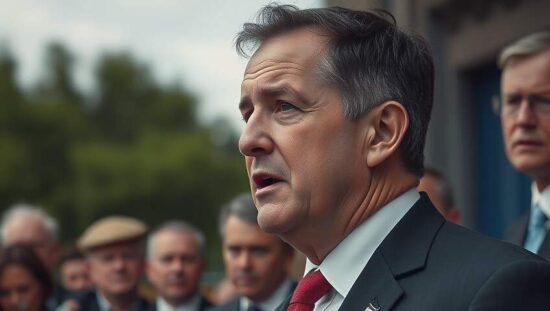
The recent reaffirmation of potential annexation threats against Greenland, a Danish territory, by Eric Trump, son of former U.S. President Donald Trump, has reignited geopolitical tensions and drawn criticism regarding U.S. foreign policy. In an interview with the German business newspaper “Handelsblatt”, Eric Trump defended the possibility of U.S. intervention, arguing that Greenland’s strategic location possesses “a great deal to do with the sovereignty of the United States and with the security and stability of the entire Western world including Europe.
His remarks, echoing previous expressions of interest in acquiring the island, appear to be driven by both strategic and resource-based considerations. The U.S. already maintains a military presence on Greenland through the Pituffik Space Base, used primarily for rocket and space activity monitoring, a factor Trump highlighted in framing the rationale for increased U.S. involvement. When pressed about potential military action, Trump asserted the necessity of a stronger U.S. presence in the Arctic, citing escalating “aggressive actions” in the region.
This stance, while presented alongside a claim that his father is “the greatest peace opponent” creates a contradictory narrative. Eric Trump attempted to reconcile this by stating his father’s aversion to protracted conflicts like those in Iraq and Afghanistan, while simultaneously emphasizing the former president’s willingness to take decisive action, particularly concerning nations like Iran and Venezuela. He echoed the familiar Trumpian tactic of publicly telegraphing future policy decisions.
Beyond the Greenland issue, Eric Trump’s comments touched upon his own political ambitions. While not declaring immediate plans, he suggested a potential future role in politics, indicating a belief that he “could move the needle” if he chose to pursue it. His assessment of the Republican party’s future leadership identified a pool of approximately 30 potential candidates capable of carrying forward the “MAGA” movement, specifically mentioning individuals like J.D. Vance and Marco Rubio as examples of talent within the party’s rising generation.
The Greenland pronouncements, paired with these reflections on potential political involvement and continued aggressive foreign policy rhetoric, underscore a persistent willingness within the Trump sphere to challenge international norms and assert U.S. dominance – a posture that continues to generate international concern and raises questions about the future trajectory of U.S. foreign policy. The implications for Denmark’s sovereignty, transatlantic relations and Arctic stability remain significant and warrant close observation.