



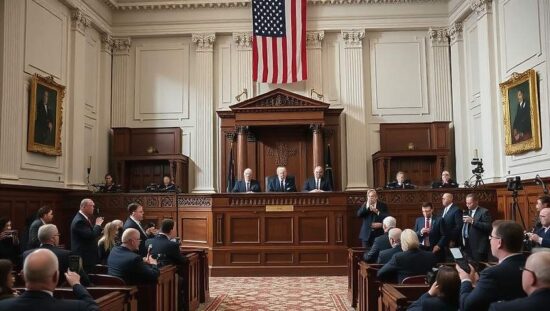
The U.S. Supreme Court on Friday struck down the bulk of the tariffs that President Donald Trump had imposed. In a 6‑to‑3 ruling, the Court held that the president had exceeded his authority in his tariff policy.
Chief Justice John Roberts, writing for the majority, said the president “asserts an extraordinary power to unilaterally impose tariffs of unlimited magnitude, duration, and scope”. He noted that due to the breadth, history, and constitutional context of this asserted power, the president must show clear congressional approval to exercise it.
Under Article I of the Constitution, taxation and related measures fall under Congress. There are only special statutes that grant the president the ability to impose tariffs in particular circumstances. Trump’s tariffs were justified under the International Emergency Economic Powers Act of 1977, a law enabling the president to act during exceptional threats to national security, foreign policy, or the economy.
The Court’s decision hits a key element of Trump’s agenda. It is still uncertain whether already-paid tariffs will be refunded and what the ruling will mean for the United States’ medium‑term tariff strategy. The Republican Party, Trump’s own group, currently holds the majority in both chambers of Congress, giving them control over future tariff policy. Earlier, a House vote on Trump’s Canada tariffs passed with a coalition of Democrats and six Republicans who broke ranks with their party.