



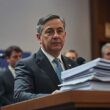

SPD General Secretary Tim Klüssendorf has called for a renewed focus on developing a large-scale reform package for Germany. He insists that achieving this requires broad societal consensus, suggesting that the government must bring together diverse stakeholders-including companies, associations, and labor unions-to the negotiating table. According to his ideas, the government should hold a focused workshop with these partners over three or four days, ideally emerging afterward with a finalized, unified policy package.
Klüssendorf argued that tackling complex issues piecemeal drains too much energy from the public. He stated, “It costs the people in the country far too much effort to be presented with a new issue every day”.
Regarding specific policies, while he indicated a possible shift away from the temporary “Relief Premium” Klüssendorf maintained that structural stability remains the paramount focus. He emphasized that the income tax reform must be initiated as quickly as possible. This aligns with a suggestion recently made by Finance Minister Lars Klingbeil (SPD), who indicated that the reform plan could be presented within the coming weeks, or even days.
Furthermore, Klüssendorf voiced criticism directed at Markus Söder, the Minister-President of Bavaria. He questioned Söder’s recent vote against the Relief Premium in the federal council, finding it difficult to understand. Klüssendorf pointed out that Söder had been highly involved in negotiating and advocating for the very premium that Bayern opposed. He reasoned that given his prominent and leading role in the debate, the expectation would have been for him to support the measure within his own coalition. According to Klüssendorf, Söder’s party holds the overwhelmingly dominant position within its own state government, suggesting that coalition deadlock was unlikely to have been a binding factor.