




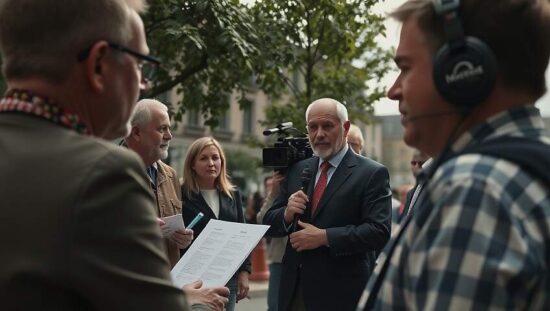
Markus Söder, the Minister-President of Bavaria and leader of the CSU, has delivered a pointed critique of the SPD, urging the social democratic party to revisit the reformist policies of its past, particularly those associated with former Chancellor Gerhard Schröder and the controversial Agenda 2010 reforms. Speaking at a CSU retreat, Söder suggested the SPD has strayed from a pragmatic approach crucial for addressing the challenges of an aging society and evolving economic landscape.
Söder’s intervention signals a deliberate attempt to influence the SPD’s policy direction, highlighting his belief that the party has lost touch with its traditional base of working-class voters. He argued that Germany requires a significant new social reform to ensure the continued welfare of its aging population and equitable access to technological advancements in medicine. A core component of this, Söder asserted, must be a shift toward increased working hours – not simply raising the retirement age, but also incorporating a modest increase in weekly working time, even as little as one additional hour. He dismissed concerns this would be unduly burdensome, citing the example of Switzerland as a model.
The Bavarian leader’s comments on migration were equally assertive, adopting a rhetoric designed to appeal to anxieties over economic strain. While expressing a welcome for those who contribute to the workforce, Söder emphasized the “enormous costs” associated with those who are unwilling or unable to work. He advocated for a more robust system of deportations, framing the policy as “not ideological, but simply practically sensible” and indicating an expectation that the SPD might be receptive to such a stance, given the perceived alignment of traditional worker sentiment with stricter immigration controls.
Söder’s broader strategy seems geared toward exploiting a perceived disconnect between the SPD’s current policies and the preferences of its historic working-class constituency, particularly in regions like Bavaria where the CSU thrives and increasingly, where the Alternative for Germany (AfD) has gained traction. By subtly encouraging a return to Schröder-era policies and advocating for a stricter approach to migration, Söder appears to be aiming to indirectly influence the SPD’s trajectory and, crucially, to draw working-class voters back towards the CSU while simultaneously attempting to reposition the SPD as a more viable party of the working class. The maneuver reveals underlying political tensions and a concerted effort to shape the national political narrative.