




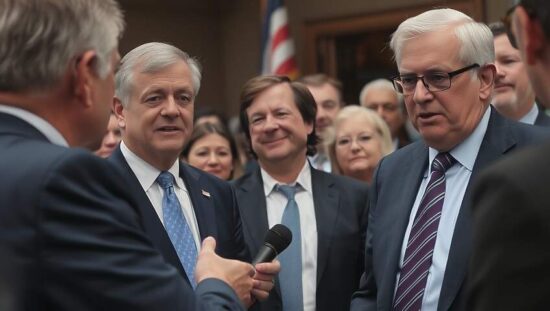
The Bavarian Minister-President and leader of the Christian Social Union (CSU), Markus Söder, has voiced surprise at the level of consternation within Germany regarding the recent U.S. military action involving Venezuela and the potential arrest of President Nicolás Maduro. During a closed-door meeting of the CSU’s state parliamentary group, Söder declared, “Regarding Venezuela, I’ll just say one thing: it’s good that Maduro is gone”. He expressed bewilderment at what he characterized as the “hysteria” surrounding the situation within Germany, arguing that the focus should be on the tangible realities of the event rather than legal technicalities.
Söder’s remarks touched on a wider critique of Europe’s diminished influence on the global stage. He asserted a need for Germany and by extension, Europe, to demonstrate greater strength to meaningfully participate in international affairs. “Europe currently lacks significance” he stated, criticizing the perceived lack of involvement of European institutions in critical international questions.
A particularly revealing aspect of Söder’s commentary concerned Germany’s relationship with the United States. He suggested that Germany possesses a strategic advantage through the perceived rapport between Chancellor Friedrich Merz (of the CDU) and U.S. President Donald Trump, describing Merz as “a real trump card” in navigating the relationship. Without this potential conduit, Söder implied, Europe would be left “largely speechless” in its ability to exert influence.
The comments sparked immediate debate, with critics accusing Söder of displaying an overly simplistic view of a complex geopolitical situation and highlighting a troubling dependence on the U.S. for European diplomatic leverage. Concerns were raised regarding the CSU’s willingness to endorse actions with potentially significant legal and humanitarian ramifications without critical assessment of the international legal framework. Some political analysts interpreted the remarks as a veiled call for a more assertive foreign policy for Germany, potentially at the expense of established multilateral approaches and in alignment with a transactional approach to international partnerships. The incident has also reopened the discussion on the future role of Germany and Europe in a shifting global power dynamic, particularly as relations between the U.S. and Europe remain uncertain.