




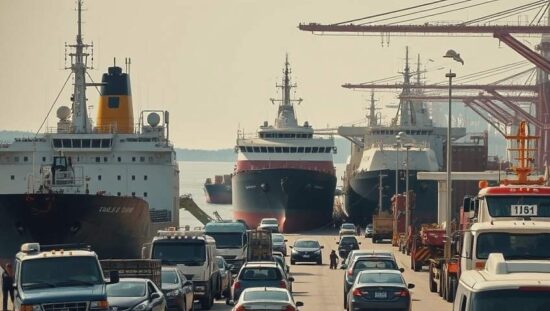
The United States government has taken a significant and assertive step in its ongoing efforts to disrupt Russia’s circumvention of sanctions, seizing two oil tankers believed to be part of Moscow’s “shadow fleet”. Homeland Security Secretary Kristi Noem confirmed the operation on Wednesday, detailing how the U.S. Coast Guard boarded the vessels, the “Bella 1” and the “Sophia”, in the North Atlantic and near the Caribbean respectively. Both tankers had recently docked in or were en route to Venezuela, a key trading partner for Russia.
The action marks a notable escalation in U.S. enforcement against maritime trade activities alleged to be facilitating the circumvention of sanctions imposed after Russia’s invasion of Ukraine. The vessels are part of a network of tankers, often referred to as the “shadow fleet” operating under altered flags and obscured ownership to transport Russian oil and evade price caps and sanctions regimes. The “Bella 1” had reportedly attempted to evade capture by repeatedly changing flags, highlighting the sophisticated measures employed to disguise illicit trade routes.
Secretary Noem emphasized the coordination amongst various government agencies – the Department of Defense, the Justice Department and the State Department – framing the operation as a direct continuation of policies championed by former President Trump. The reference to Trump’s leadership, while seemingly a tactical messaging point, is likely intended to signal a renewed commitment to aggressively confronting perceived Russian economic transgressions.
The decision to board and seize the tankers raises critical legal and political questions. While the U.S. asserts its right to enforce sanctions and combat the flow of funds to entities supporting terrorism, the operation within international waters inevitably draws scrutiny regarding the jurisdictional basis and potential for escalating tensions with Russia and its allies. Critics suggest the action could be interpreted as an act of piracy and may prompt retaliatory measures.
Furthermore, the operation underscores the complex and often opaque nature of global maritime trade, where verifying ownership and origin of goods is increasingly challenging. The involvement of Venezuelan ports raises concerns about the country’s potential complicity or vulnerability in facilitating these clandestine operations. Law enforcement officials are currently onboard the “Bella 1” conducting investigations, although reports indicate no gunfire was exchanged during the boarding process. The move signals a clear intention by the Biden administration to aggressively tackle perceived weaknesses in the sanctions regime and disrupt Russia’s economic maneuvering, but it also sets the stage for potentially fraught diplomatic and legal challenges in the weeks and months ahead.