




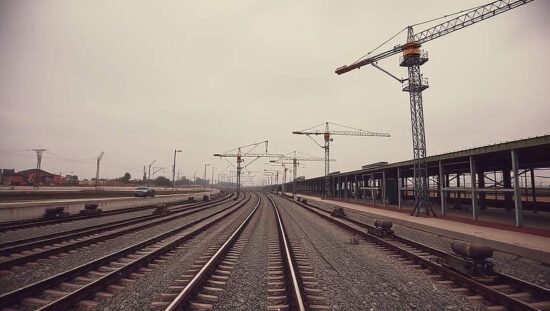
A significant funding shortfall threatens to derail crucial railway expansion projects across Germany, according to a parliamentary response revealed this week. The Bundesverkehrsministerium (Federal Ministry of Transport) faces a projected deficit of two billion euros by 2029, leaving several meticulously planned and ‘shovel-ready’ rail infrastructure developments in limbo. The disclosure, prompted by a detailed inquiry from the Green Party faction and reported by “Tagesspiegel”, exposes a potential breach of promises made regarding Germany’s ambitious infrastructure upgrade agenda.
Following a recent Coalition Committee meeting where discussions centered on infrastructure development, CDU leader Friedrich Merz had emphatically declared that all projects deemed “construction-ready” would proceed. However, the parliamentary response indicates that Deutsche Bahn is currently unable to advance five completed expansion projects due to a lack of confirmed federal funding. These projects range from the electrification of the vital Mitte-Deutschland-Verbindung (Central Germany Connection) in Thuringia, crucial for regional connectivity, to the electrification of the Munich-Mühldorf-Freilassing line section in Dorfen.
The delays extend beyond electrification. Construction of the “Wallauer Spange” – a vital link intended to better connect Wiesbaden to Frankfurt Airport – has been postponed, as have preparatory actions for the crucial Mannheim rail hub upgrade. Furthermore, a 267 million euro facility for combined freight transport in Regensburg is also at risk.
Matthias Gastel, a railway expert for the Green Party’s parliamentary group, voiced strong criticism, arguing that despite the establishment of a special asset fund, the government is failing to allocate sufficient resources for new construction and upgrades. “Verkehrsminister Patrick Schnieder must keep his promise: all construction-ready projects must be built” Gastel asserted. He warned that the burgeoning billion-euro deficit risks forcing the abandonment of vitally important rail projects.
The delayed Mitte-Deutschland-Verbindung, specifically, carries significant political weight. Gastel emphasized that it represents a critical promise to an entire region, offering the prospect of improved rail services. He stressed that Schnieder and Merz now face pressure to uphold their commitments, as residents in Thuringia are actively expecting a guaranteed funding solution. The situation highlights a growing disconnect between stated policy goals and the practical resources being deployed, raising questions about the long-term viability of Germany’s infrastructure ambitions and the credibility of political pledges.