




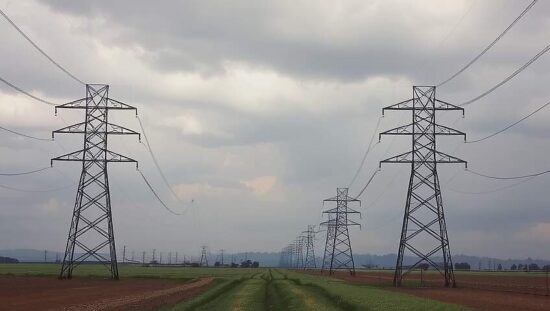
Germany’s commitment to ambitious climate goals is facing a pragmatic reassessment, with Environment Minister Carsten Schneider advocating for a shift in strategy for expanding the nation’s power grid infrastructure. In a move likely to spark debate, Schneider has proposed prioritizing overhead power lines (freileitungen) over underground cables (Erdkabel) for new projects, citing prohibitive costs associated with extensive underground cabling as a significant impediment to the energy transition’s pace.
Schneider’s suggestion, detailed in an interview with the Rheinische Post, directly addresses concerns raised by recent studies highlighting the lagging performance of the transport and building sectors in meeting climate targets. While acknowledging positive developments in electric vehicle adoption and foreshadowing a new subsidy program to accelerate the shift to electric mobility, the Minister emphasized the urgency of tackling infrastructure bottlenecks.
“All factions within the governing coalition have publicly endorsed climate targets. To achieve these, we must address the escalating costs hindering the energy transition” Schneider stated, arguing that burying power lines underground significantly inflates project expenses. The proposed strategy would see existing, already-planned underground projects proceed as scheduled, while future expansions would largely rely on overhead lines.
The proposal reflects a growing tension within the government regarding the feasibility of meeting stringent climate targets while maintaining political and public acceptance. The energy transition, while broadly supported, has encountered substantial resistance, often fueled by concerns over cost and aesthetic impact. Overhead lines, although generally cheaper, are frequently met with local opposition due to visual disruption.
Furthermore, Schneider reaffirmed the importance of upholding the core principles of the existing building energy law (Gebäudeenergiegesetz) during upcoming reforms, particularly concerning the promotion of heat pumps. He emphasized the law’s crucial role in reducing CO2 emissions and signaled internal deliberations to ensure its climate-protection effectiveness.
A nuanced perspective on financial support for climate-friendly technologies emerged in Schneider’s comments, suggesting a recalibration of subsidies. While long-term financial benefits of heat pumps are recognized, he argued that greater emphasis should be placed on assisting lower and middle-income households to afford the upfront costs, implying a potential re-evaluation of existing subsidy structures that currently favor higher-earning individuals who can afford the transition without significant government intervention. The debate underscores the complex political and economic challenges inherent in Germany’s ongoing energy transition and raises questions about the optimal balancing act between ambition, affordability and public buy-in.