




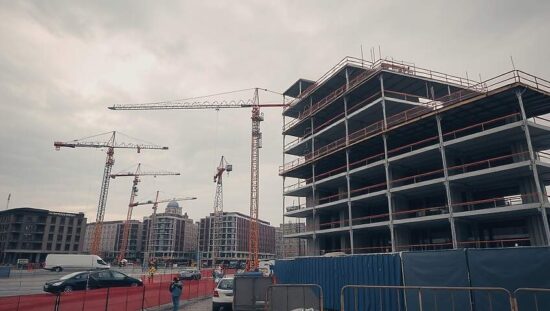
A major construction project at the heart of Berlin’s parliamentary district is facing potential cost overruns that could push the price tag well beyond initial estimates, raising concerns about fiscal responsibility and the prioritization of parliamentary infrastructure. The Luisenblock Ost 1 development, situated near the Reichstag building on the Spree River, is now projected to cost upwards of €1 billion, significantly exceeding the previously budgeted €890 million, according to Bundestag Vice President Omid Nouripour of the Green Party.
Nouripour, who chairs the Parliamentary Building Commission of the Council of Elders, acknowledged the difficulty in justifying the escalating costs. He emphasized the project’s crucial role in maintaining the functionality of the German parliament, yet conceded that the increased expenditure presented a significant challenge for public perception and government finances. While acknowledging a stark need to explore every feasible avenue for cost reduction without compromising operational effectiveness or security measures, he cautioned that further delays would only exacerbate the problem.
The Luisenblock Ost 1 development is part of a larger plan that includes the adjacent Luisenblock Ost 2, currently undergoing an architectural competition process expected to conclude later this year. Nouripour explicitly stated that the second phase of the Luisenblock Ost complex will be the “last major new construction project” undertaken by the parliament. He strongly suggested that subsequent funding should be exclusively directed toward urgently needed renovations and repairs of existing parliamentary buildings, effectively curtailing ambitions for further expansive construction initiatives.
The burgeoning costs of the Luisenblock project are likely to draw scrutiny from opposition parties and taxpayer advocacy groups, particularly at a time when the government is grappling with economic pressures and demands for investment in other crucial areas. The commitment to limit future large-scale construction efforts, while seemingly pragmatic, may also be viewed as a reactive measure, potentially driven more by budgetary constraints than a proactive long-term infrastructure strategy. The situation prompts a wider debate on the transparency and accountability of parliamentary spending and whether the original planning scope of the Luisenblock project warrants re-evaluation in light of the projected cost escalations.