




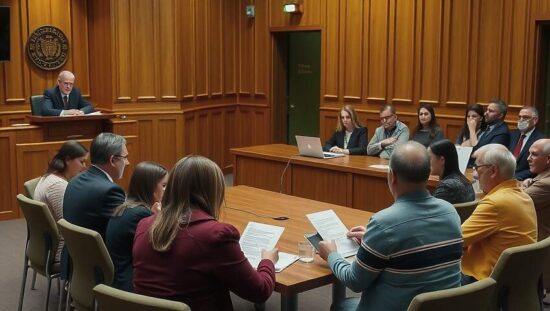
In Germany, only one in ten asylum seekers who appeal a threatened deportation succeeds in administrative courts. A Focus magazine report, based on a survey of the 16 federal states, found that last year just 10.4 percent of such appeals were granted. The highest approval rates appeared in Saarland, where 19.5 percent of 564 cases were successful, and in Thuringia, with 17.3 percent.
Most of the plaintiffs are refugees whose applications were rejected by the Federal Office for Migration and Refugees (BAMF), leaving them without the right to stay in Germany. Through their lawsuits, they attempt to stop an imminent deportation, placing great pressure on the administrative courts.
Recent investigations by the magazine show that asylum proceedings now last an average of twelve months-twice the time they were supposed to take. The main cause of the delays is the sheer volume of appeals. In the first three quarters of 2025, asylum appeals accounted for 74.2 percent of all new entries in Baden‑Württemberg, 66 percent in Rhineland‑Palatinate, 74.2 percent in Lower Saxony, and 59.8 percent in Bavaria.
The United Association of Administrative Judges predicts that the number of appeals will continue to rise, negatively affecting other types of cases. The association cites the increasing rejection of Syrian asylum seekers-since the end of the civil war and the ousting of Bashar Al‑Assad-as the main driver behind the surge.
The CDU stresses an urgent need for reform. “When only a small fraction of appeals succeed while the majority of cases congest the courts, it becomes clear that we must speed up proceedings to relieve the burden on our judiciary” said Deputy Leader Günter Krings. He argues that reforms can align with the principles of the rule of law. Krings calls for quicker, digitally supported asylum procedures before administrative courts and stronger obligations for the plaintiffs, aiming to prevent cases from dragging on for years and leading to the de facto establishment of provisional residence rights.