




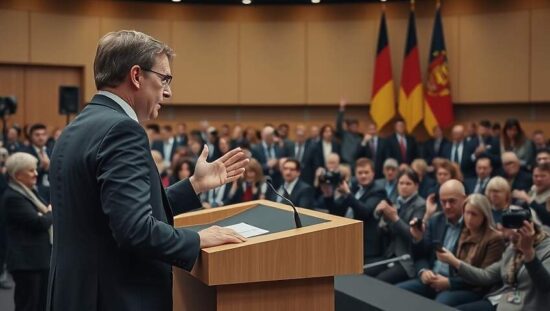
In a recent discussion about a digital levy for U.S. and Chinese tech giants, the North‑Rheinland‑Westphalia (NRW) media minister Nathanael Liminski (CDU) articulated a concrete model for the first time. He proposed that the state use the “time‑tested mechanisms of media concentration law” to compel companies such as Google, Meta and others to share the costs of supporting alternative media offerings.
Liminski told the “Westdeutsche Allgemeine Zeitung” that those who wield significant influence over public discourse “must contribute to media diversity in order to break it”. He argued that large private broadcasters like RTL and Pro7/Sat 1 cannot enjoy unbounded reach and are obliged to fund independent, regional windows. Accordingly, either platforms would have to be structurally constrained, or they would pay a levy based on their reach to strengthen competing services.
He emphasized that any model must legally specify who benefits from the levy and how the revenue is distributed. By framing his proposal, Liminski aligns himself with the independent media state minister, Wolfram Weimer, who plans to present a digital‑tax proposal later this year. “It requires political courage, especially given that the United States would naturally oppose such a move” Liminski acknowledged.
The U.S. government has made clear its stance; President Donald Trump once threatened tariffs against states that imposed digital taxes or targeted U.S. corporations through regulation. Despite this, Liminski remains resolute. “These platforms have earned billions in Europe over the years-not just by siphoning advertising revenue from traditional media but also by monetizing journalistic content itself” he said.
He warned that artificial intelligence has already launched the next phase of the problem. Services like Google’s “Overview” generate new, competing products by reworking copyrighted material. “This can’t continue if journalism and the creative economy are to survive financially” Liminski warned. Otherwise, a handful of dominant platforms would dictate the media landscape for billions worldwide.
The Rhineland‑Palatinate premier, Alexander Schweitzer (SPD), echoed the call for a digital levy over the weekend. Speaking to the “Rheinische Post”, he explained that AI systems take editorial content, process it, and then offer it free to users, undermining the business models of private media providers. He added that the exact levy amount would be negotiated among the governors, but “speed is essential”.