




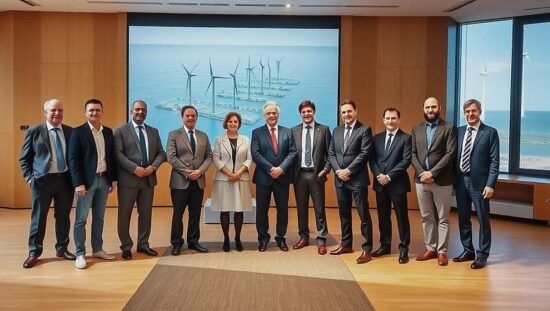
The heads of state and government of several North Sea‑bordering countries reached a consensus at the third North Sea summit in Hamburg to tighten cooperation in developing offshore energy. In the Hamburg Declaration, the participants reaffirmed their aim to transform the North Sea into the world’s largest hub for clean energy, focused on offshore wind, cross‑border power grids, and greater interconnection of energy infrastructure. Signatories included Belgium, Denmark, France, Germany, Ireland, Luxembourg, the Netherlands, Norway, and the United Kingdom.
The countries say these measures will bolster Europe’s energy security, stabilize prices, preserve industrial competitiveness, and advance the continent’s 2050 climate‑neutrality goal. In light of geopolitical tensions, the signatories emphasized the growing importance of energy and infrastructure protection, citing rising threats from sabotage, cyberattacks, and other hybrid attacks on maritime energy assets. They called for closer international coordination on security matters.
The states reaffirmed the target set at the earlier Ostend summit: 300 GW of offshore wind capacity by 2050. To revive investment, they plan to streamline permitting, make tenders more reliable, strengthen supply chains, and expand European production capabilities and port infrastructure. They also announced a commitment to promote cross‑border offshore projects, with up to 100 GW of the total capacity expected to come from joint ventures. A joint financing framework is to be developed with the European Commission and the European Investment Bank. Building a hydrogen economy in the North Sea region is a key priority, with support for projects that link offshore wind with the production, transport, and storage of climate‑neutral hydrogen.
In response to mounting security risks, the participants also pledged enhanced cooperation to safeguard offshore energy infrastructure, including within NATO. Planned initiatives involve better coordination among security agencies, joint exercises, and measures against substandard vessels.