




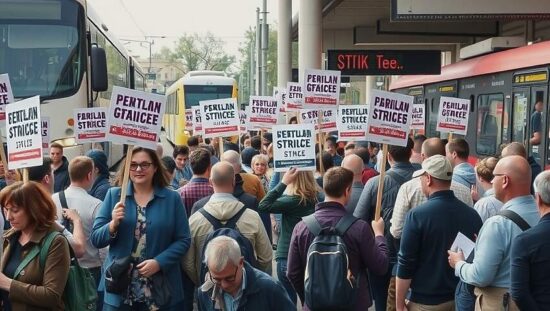
A warning strike began this Thursday morning in the local public transport of several German states, primarily affecting Bavaria, Hamburg, North Rhine‑Westphalia and Saxony‑Anhalt. The strikes were withdrawn in Hesse and the Saarland on short notice.
As a result, buses, U‑trams and streetcars normally cease to run. Regional and S‑Bahn services operated by Deutsche Bahn are not affected. In some areas, such as Halle (Saale), emergency timetables have been issued. The action is the third joint industrial dispute under the nationwide wage negotiations, which cover around 100,000 employees across 150 companies. In a few states the strike is expected to continue for several days.
Verdi has set separate demands in each state. They include a reduction of the weekly working hours and shift lengths, as well as higher premiums for night and weekend work. The overall aim is to lower the workload for employees, curb high staff turnover, and secure public transport as an essential service.
Christine Behle, who chairs Verdi’s delegation on transportation, defended the strikes. “We need more money for local transport nationwide” she told the “Tagesspiegel Background” service. She argued that isolated company strikes cannot bring about change; a coordinated nationwide protest shows that insufficient funding is a systemic problem.
Behle pointed out that only five states are demanding additional pay. The other demands focus on classic relief measures such as shorter shifts, reduced weekly hours and longer rest periods. She emphasized the current heavy workload, high sickness rates among transportation staff, and the public‑transport system’s struggle to remain attractive-especially to young people.
She rejected proposals to restrict the right to strike, explaining that while she acknowledges warning strikes can negatively impact those planning holidays, the current action is limited to a single day and is meant to highlight issues rather than create lasting fear. Behle stressed that striking is a constitutionally protected right and cannot be considered misuse.