




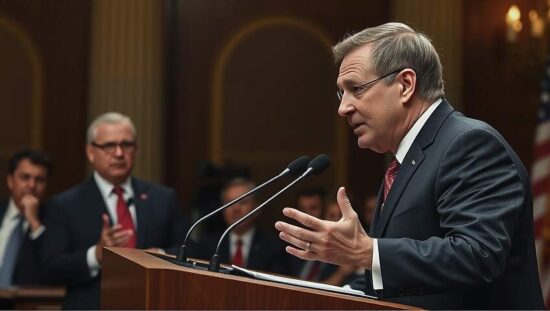
Former Chancellor Angela Merkel (CDU) emphasized the need for the debate surrounding the pension system to be handled with greater courage and honesty regarding future financial challenges. Speaking to the news magazine “Focus”, she stated that the German people have already been making substantial contributions to stabilizing the social security systems for years, but this effort needs to be communicated more effectively by politicians.
Merkel suggested that it would be helpful to remind people that their contributions have sustained the systems significantly since 2005. She pointed out that the phased raising of the retirement age to 67 represents a massive collective effort. According to her, every graduating class now works one, and eventually two, months longer. For those retiring in 2029, this means working two years more compared to 2005. “This is a significant contribution, especially for people engaged in physically demanding labor” she noted.
Simultaneously, the former Chancellor challenged current policymakers to present new concepts well in advance of the current regulations expiring. “If one simply says: ‘We managed this, but after 2029, we have no new regulations and the demographic problem remains,’ we must find a connecting solution-then, I believe, one can convince many people” she argued. After all, most citizens desire reliable old-age security for their own children and grandchildren.
Reviewing past decisions, Merkel defended the move to raise the retirement age to 67, countering the claim that it was merely a superficial moderation. “The pension reform to age 67 was not a moderation” she corrected. For Merkel, success in achieving such reforms hinges on clearly defining objectives. “People must know what goal I am pursuing with this” she asserted. The essence of politics, she concluded, is not creating divisions between groups of people. “I must ask: What is my goal? What contributions are being made today? What contributions will be required in the future?” Only through this transparency can the necessary adjustments be successfully implemented in an ever-changing world.