


The United States Justice Department has formally accused Venezuelan President Nicolás Maduro and his wife, Cilia Flores, of a complex web of criminal activities, including narcotics trafficking conspiracy and terrorism, escalating tensions significantly between the two nations. Attorney General Pamela Bondi announced the indictments on Saturday, outlining charges that encompass cocaine importation, possession of machine guns and explosives and related conspiracy offenses.
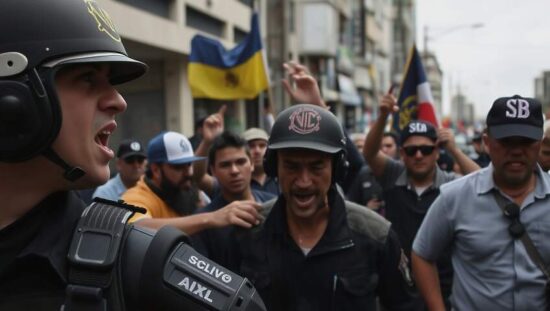
The timing of the announcement, coinciding with what has been described as a military intervention by U.S. forces within Venezuela, has immediately fueled controversy and accusations of blatant political interference. While the U.S. government maintains the operation was solely focused on the apprehension of Maduro, the circumstances surrounding his detention – within a country already grappling with profound socio-economic and political instability – raise serious questions about the legitimacy and legality of the action.
Critics are already questioning the evidentiary basis for the charges, suggesting they are a pretext for regime change, a narrative consistently denied by Washington. Maduro’s government has denounced the accusations as a fabricated attempt to destabilize Venezuela and undermine its sovereignty. Observers point to the U.S.’s long history of involvement in Venezuelan politics, including recognizing opposition leader Juan Guaidó as interim president in 2019, as further evidence of a deliberate strategy to oust Maduro.
The indictment also names several high-ranking Venezuelan officials, painting a picture of widespread corruption and illicit activity within the Maduro administration. However, the reliance on informants and alleged cooperation from within the Venezuelan military raises concerns about the integrity of the investigation and the potential for manipulation.
The move risks plunging Venezuela deeper into chaos and could trigger a wider regional conflict. International reaction has been swift, with several Latin American nations condemning the U.S. action as a violation of international law and an infringement on Venezuelan sovereignty, while others have cautiously welcomed the development as a step towards democratic reforms. The legal proceedings against Maduro and Flores and the implications of the U.S. military intervention, are certain to be intensely scrutinized and will undoubtedly shape the future trajectory of Venezuela and its relationship with the international community.