




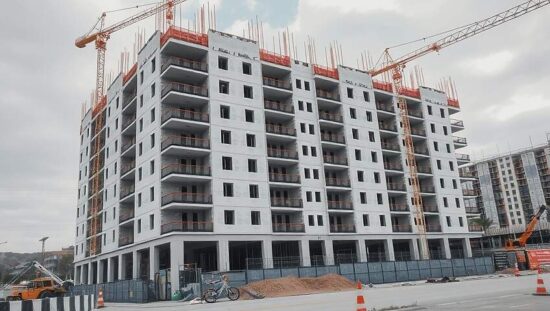
Rising Construction Costs Intensify Housing Affordability Concerns in Germany
New data released by the Federal Statistical Office (Destatis) reveals a persistent upward trend in construction costs across Germany, adding further pressure to an already strained housing market and raising questions about the efficacy of government policies. Prices for the construction of conventionally built residential buildings rose by 3.2% in November 2025 compared to the same period in 2024, a slight acceleration from the 3.1% increase recorded in August 2025. Month-on-month, prices climbed 0.5% in November, signaling a continued escalation.
The surge is particularly pronounced in core construction phases. Raw material costs for residential building projects experienced a 2.5% increase year-on-year, primarily driven by escalating expenses in concrete and masonry work, components vital to the overall construction index. While concrete work saw a 1.5% price increase, masonry costs climbed by 1.3%. More significantly, roofing and timber/wood construction work demonstrate a more acute price shock, with increases of 4.5% and 5.4% respectively. These fluctuations highlight a vulnerability in the supply chain and potential bottlenecks impacting specific building trades.
The data also indicates considerable cost increases in finishing and fit-out work, which rose 3.8% year-on-year. Of particular note is the 4.4% increase in the price of heating systems and central water heaters, including increasingly popular heat pump installations. This sector, alongside metalwork, holds a substantial weighting within the overall residential building price index, suggesting a complex interplay of energy transition mandates and material costs. The 5.4% rise in costs for electrical, security and information technology systems, alongside a 3.5% increase for thermal insulation composite systems, underscores broader inflationary pressures impacting the building technology sector.
Beyond new construction, maintenance work on existing residential buildings has also seen a significant price increase, climbing 4.1% compared to November 2024. This impacts landlords and homeowners alike, contributing to rising housing expenses beyond the initial purchase price.
The trend isn’t confined to residential buildings. Prices for constructing office buildings rose 3.5%, while commercial buildings saw a 3.3% increase. Road construction also experienced a 3.5% price rise. While the growth rate remains below the four percent threshold seen prior to May 2021, the continued escalation raises concerns about the government’s ability to effectively mitigate the underlying economic pressures impacting the construction industry.
Critics argue that a combination of factors, including bureaucracy, skills shortages within the trades and the rapidly evolving regulatory landscape around energy efficiency and environmental sustainability, contribute to the persistent cost increases. The data is likely to fuel the debate surrounding housing affordability and the effectiveness of existing government subsidies and incentives aimed at stimulating new construction and easing the pressure on the German housing market. Further investigation is needed to determine the long-term implications of these escalating construction costs and their potential to exacerbate the existing housing crisis.