




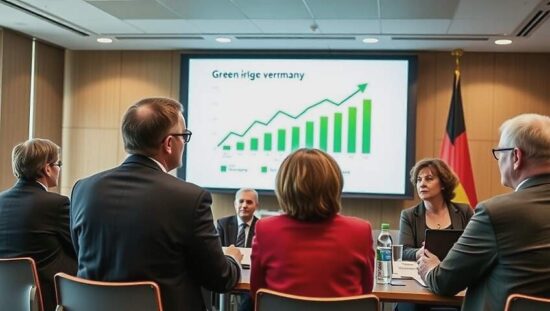
One year after the tough defeat in the federal election, the Greens aim to heal the rift between businesses and the party with a new economic strategy. In an eight‑page statement, the Bundestag faction calls for cheaper energy and a “bridge electricity price” of five cents per kilowatt hour. The proposal also includes lowering the electricity tax for all companies and households, a move that would go beyond the current government plan, which mainly seeks to relieve large firms.
The Greens want an active industrial policy that protects key sectors more robustly than before. These include microelectronics, batteries, artificial intelligence, drug supply, and strategic basic‑material industries such as steel and chemicals. In the steel sector, they propose climate‑protection agreements in which the state promotes a transition to climate‑friendly production. In the chemical industry, the state would at least partially reimburse firms for the additional costs of green restructuring.
They also demand stronger support for the auto industry. According to the paper, the rapid growth of electrification presents “opportunities for Germany’s automotive sector” if a consistent shift to electric mobility is finally pursued. Therefore the document sets clear goals for electrification within the automotive sector.
The Greens see risks to Germany’s global standing not only in traditional location factors but also in positioning against system rivals such as China and the aggressive geo‑economic posture of the United States. They call for Germany to forge an “alliance of counter‑power”. On Monday, the Greens will convene an economic advisory board for this legislative period. The roughly 50‑member advisory group is expected to include managers such as E.ON CEO Leonhard Birnbaum, the head of Deutsche Bank’s fund subsidiary DWS, Stefan Hoops; Thyssen‑Stahl Euro CEO Marie Jaroni; and Allianz board member Günther Tallinger.