




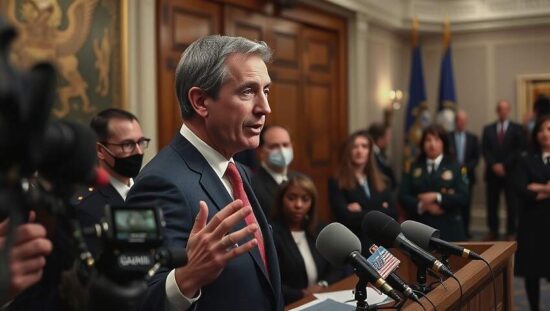
Vice government spokesman Steffen Meyer dismissed the suggestion of eliminating a public holiday as a measure to help manage the current crisis, calling it “speculation”. Speaking to the dts news agency on Friday, Meyer stated that he would not evaluate individual proposed measures. However, he also avoided issuing a clear rebuttal that the federal government is considering such a move. According to Meyer, various proposals are “always being discussed” given the current strained economic situation. The spokesman added that their focus is on preparing things internally and will only announce a decision once an agreement has been reached.
The Chancellor had previously remarked last year that the topic of abolishing holidays keeps resurfacing, comparing it to “the monster of Loch Ness” and stated he would not engage in such discussions. A few weeks later, in a TV interview, he mentioned that Pentecost Monday could potentially be eliminated, but then clarified, “but we will keep it”. According to “Der Spiegel”, the CDU/CSU alliance subsequently proposed at the coalition committee in the Villa Borsig last weekend that May 1st be abolished as a statutory public holiday, an action reportedly causing outrage within the SPD.
The vice government spokesman declined to comment on this matter on Friday, explaining to the dts news agency that it is “extremely important that we conduct these discussions with utmost seriousness but also with absolute confidentiality”.
Economists estimate that every additional working day would increase the GDP by about 0.2 percent. Germany observes nine nationwide public holidays, four of which, by definition, can never fall on a weekend. Five other holidays rotate across all seven weekdays, contributing, on average, to the loss of three to four working days annually. Additionally, individual states observe other days off for public holidays.