




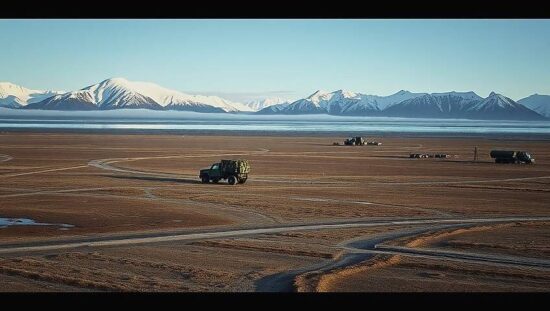
The Danish Arctic Command, spearheaded by Major General Sören Andersen, is actively seeking to deepen military cooperation with the Bundeswehr, Germany’s armed forces, emphasizing a growing need to bolster defenses throughout the Arctic region. In an interview with the Redaktionsnetzwerk Deutschland (RND), Andersen highlighted Germany’s valuable capabilities, particularly in maritime operations and reconnaissance, as crucial assets for safeguarding Greenland, a Danish territory.
Andersen underscored the long-standing military partnership between Denmark and Germany, citing positive experiences from past joint deployments, including in Iraq where he directly commanded both American and German troops. While Germany did not deploy combat forces to Iraq, Andersen noted the effective integration of German staff elements within NATO missions.
The increasing focus on enhanced cooperation isn’t driven by immediate threats directly adjacent to Greenland. The core concern, Andersen stated, revolves around Russia’s actions and potential future strategies following the conflict in Ukraine. While Russia currently maintains limited presence near Greenland, the expectation is that, upon the conflict’s conclusion – ideally with a victory for Ukraine – Moscow will redirect resources and capabilities towards other regions, including the Arctic and Baltic Sea areas. This necessitates a heightened commitment to protecting NATO’s northern flank and fortifying Greenland’s defenses.
Despite acknowledging a collaborative relationship between Russia and China in the Arctic Ocean, Andersen clarified that these operations are largely concentrated further west, towards Alaska and in the Bering Strait, rather than in Greenland’s vicinity. He emphasized the continued and vital, partnership with the United States, with a significant portion of the Danish Arctic Command’s staff integrated within the US Pituffik Space Base, facilitating daily joint operations. This close collaboration spans decades, encompassing various engagements from the Balkans to Afghanistan.
When pressed on the possibility of a potential US annexation of Greenland, a historically recurring geopolitical consideration, Andersen declined to comment. He did, however, playfully note the enduring utility of traditional methods, remarking on the effectiveness of dog sleds in the Arctic environment, further illustrating the blend of modern military strategy and enduring logistical realities within the region. The deepening partnership with Germany signals a clear shift towards increased militarization of the Arctic and raises critical questions about NATO’s long-term strategic posture and the potential escalation of geopolitical tensions in the High North.