




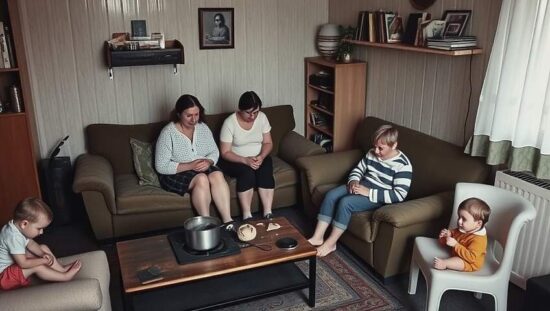
About 13.3 million people in Germany had an income below the poverty‑risk threshold in the most recent assessment, meaning that 16.1 % of the population was considered at risk of poverty, according to the Federal Statistical Office (Destatis) on Tuesday. A year earlier, the poverty‑risk rate had been 15.5 %.
Under the European Union (EU) definition, a person is at risk of poverty if their income is less than 60 % of the median equivalised income of the whole population. In 2025 the threshold for a single person living alone was net €1,446 per month (2024: €1,381), and for a household with two adults and two children under 14 it was €3,036 per month (2024: €2,900).
Looking at different household types, two groups show particularly high figures. Singles had a poverty‑risk rate of 30.9 %, and people in single‑parent households 28.7 %. Comparing by main employment status, the unemployed have the highest rate at 64.9 %. Other non‑employed persons also face strong risk (33.8 %), and retirees are at 19.1 %, exceeding the average.
A broader picture emerges when both income and social participation opportunities are considered. In 2025 about 17.6 million people in Germany were threatened by poverty or social exclusion, representing 21.2 % of the population-almost unchanged from the 21.1 % recorded the previous year. According to the EU definition, a person is at risk of poverty or social exclusion if at least one of the following three criteria is met: income below the poverty‑risk threshold; the household experiences significant material and social deprivation; or the household has very low employment participation.