




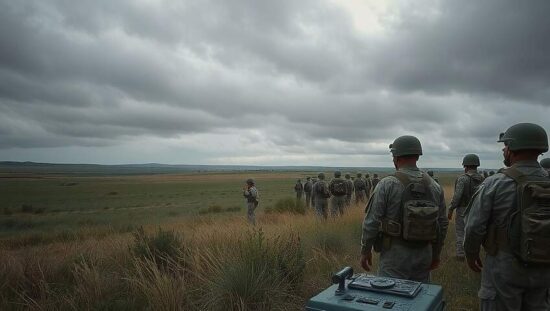
Germany has signaled a potential shift in its involvement in the Ukraine conflict, with Christian Democratic Union (CDU) leader Friedrich Merz suggesting a possible military contribution to secure a future ceasefire. Following a meeting of Ukraine’s allies in Paris on Tuesday, Merz stated that Germany could be prepared to register forces for Ukraine “on neighboring NATO territory.
While stressing that the specifics of any German contribution would require decisions from the German government and parliament, Merz explicitly distanced the CDU from ruling out any type of involvement, stating, “We exclude fundamentally nothing in this process”. This represents a significant departure from Germany’s historically cautious stance on direct military intervention.
The move echoes commitments made by France and the United Kingdom, who have already signed a declaration of intent with Ukraine outlining the potential deployment of soldiers for a multinational force following a ceasefire. French President Emmanuel Macron emphasized that the deployment would not involve frontline combat but rather “peacekeeping from a distance”. UK Prime Minister Keir Starmer added that France and the UK are considering establishing bases within Ukraine once Russia demonstrates a willingness to negotiate.
The prospect of a multinational force securing a peace agreement, while ostensibly designed to provide stability, raises critical questions regarding escalation and the potential blurring of lines between support and direct participation in the conflict. Twenty-six Western nations previously indicated a willingness to contribute troops to a ceasefire operation, but the more recent commitments from France, the UK and now a tentative nod from Germany, signal a potential evolution in the scope and nature of that involvement.
Currently, the German Bundeswehr is deployed along NATO’s eastern flank in countries like Lithuania and Poland. However, the possibility of troops being deployed closer to the conflict zone presents considerable political and logistical challenges for Berlin and is certain to draw intense scrutiny from both within Germany and across the international community. Critics argue that the prospect of deploying German troops, even in a peacekeeping capacity, carries significant risks and could be interpreted by Moscow as a direct escalation, jeopardizing any chance of a negotiated settlement. The debate promises to be fiercely contested within the German Bundestag.