




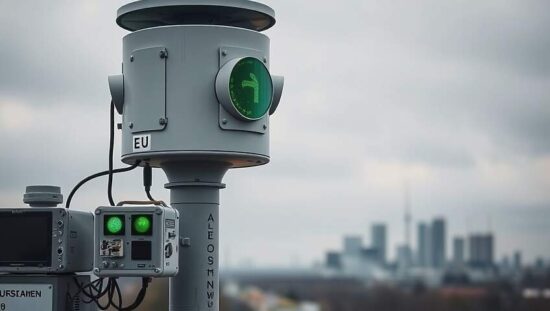
In 2025, Germany again complied with all European air‑quality thresholds, according to a provisional assessment of data from about 600 monitoring stations. The Environmental Agency (UBA) announced this after reviewing the measurements.
Although the German data met the European standards, the World Health Organization’s recommendations remain far behind. WHO advises an annual mean of no more than 10 µg/m³ for nitrogen dioxide (NO₂) and 5 µg/m³ for fine particulate matter (PM₂.₅). Germany’s averages are still too high.
For fine particulates, 2025 marks the eighth consecutive year that the EU limit of 25 µg/m³ at annual mean is satisfied. The NO₂ ceiling of 40 µg/m³ was reached for the second year in a row. However, the overall yearly doses of PM₂.₅ and NO₂ were higher than in previous years.
Dirk Messner, president of the UBA, noted that meeting all thresholds keeps the positive trend from recent years going forward, while emphasising that further work is needed to improve air quality further.
Starting in 2030, stricter limits from the new European air‑quality directive will become mandatory. For the annual mean, the NO₂ limit will drop from 40 to 20 µg/m³, and the PM₂.₅ limit will fall from 25 to 10 µg/m³. The long‑term goal is to align fully with WHO’s standards. The directive stipulates that limits will be reviewed at the end of 2030 and then every five years, with a target by 2050 of reducing pollutants to a level that is no longer harmful to people or the environment.
Messner added, “While the new EU limits gradually approach the more ambitious WHO recommendations, every improvement reduces the health risk for the population”.
When comparing 2025 air‑quality data to the stricter 2030 EU thresholds, some gaps remain. Current analyses show that about 39 % of stations exceed the NO₂ target, and roughly 18 % exceed the PM₂.₅ target. UBA estimates that ongoing improvements should allow most pollutants to meet their 2030 limits, with only occasional short‑term overruns for PM₂.₅ and NO₂.
According to the European Environment Agency, air pollution costs the EU 180 000 lives each year. For people with pre‑existing conditions, timely information about high pollutant levels is essential for adjusting behaviour and reducing the risk of hospital admissions for heart, circulatory, and respiratory diseases. The UBA’s “Air Quality” app alerts users to poor air quality and offers health recommendations and practical tips to help prevent such medical events.