




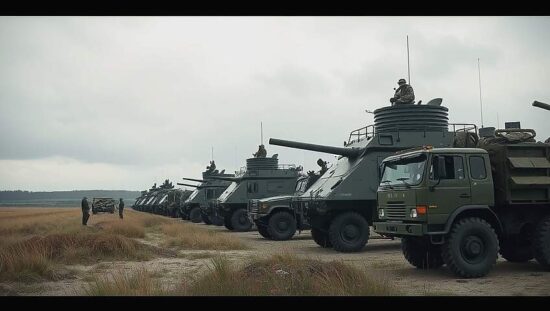
The possibility of German military involvement in a multinational peacekeeping force deployed to Ukraine remains a subject of internal debate within the Social Democratic Party (SPD), signaling a cautious approach to potential commitments. Adis Ahmetovic, the SPD’s foreign policy spokesperson in the Bundestag, acknowledged that the party has not yet definitively endorsed or rejected participation, describing the discussion as “still a hall debate.
Ahmetovic’s remarks highlight the significant hurdles hindering any near-term prospect of a peacekeeping mission. With continuous Russian bombardments and a lack of substantive peace negotiations, the practical foundation for such an operation is currently absent. He emphasized Germany’s ongoing commitment to its responsibilities within the EU and NATO, suggesting future support for “robust security guarantees for Ukraine and a strong European security architecture.
However, Ahmetovic stressed the immediate priority should be focused on diplomatic efforts aimed at ending the conflict at the start of the new year. He underscored the need for a united European front, crucially retaining the engagement of the United States despite recent strains in transatlantic relations. He argued that U.S. involvement is indispensable to pressuring Putin’s Russia into meaningful negotiations.
Reports surfaced pre-New Year’s from diplomatic sources within Brussels regarding a potential peacekeeping force comprising 10,000 to 15,000 soldiers from European nations. These echoes earlier discussions from French President Emmanuel Macron, who in September alluded to a contingent of 26 nations participating in a “coalition of the willing” intended to facilitate a peace accord.
The ambiguity surrounding German participation was further revealed by Chancellor Friedrich Merz of the Christian Democratic Union (CDU). When questioned about a potential German contribution, Merz appeared to evade a direct answer, pointing to the international composition of the “coalition of the willing” which includes nations beyond Europe, such as Canada and Australia. This response has been interpreted by some observers as a deliberate move to distance the CDU from a decision that could be politically unpopular and carries significant risks, underscoring the political sensitivities surrounding any consideration of direct German involvement in a precarious and volatile situation. The ongoing uncertainty reflects a broader hesitation within the German political establishment regarding the balance between supporting Ukraine and avoiding escalation.