



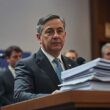

During joint government consultations in Hanover, Germany and Brazil agreed to deepen their strategic partnership. According to the joint concluding declaration, both nations share a fundamental interest in a political order built on agreements, enabling them to address global challenges together through dialogue and cooperation.
Federal Minister Friedrich Merz (CDU) stated that the strategic partnership is “strong and dynamic” noting that it was further developed over the past two days. He emphasized that cooperation is more necessary than ever, especially in a time of profound global order change. Merz expressed the desire to strengthen mutual benefits and become a “network of strong and like-minded partners”.
The governments committed to promoting economic and security cooperation, advancing joint efforts in areas such as digitalization, science, technology, innovation, climate protection, and sustainable development. Furthermore, they agreed to continue collaborating in multilateral organizations, notably the United Nations, as well as forums like the WTO, IMO, and G20.
Both governments stressed the importance of the EU-Mercosur agreement for closer economic ties and welcomed its provisional application starting May 1, 2026. They also agreed to intensify discussions on a double taxation agreement and promote cooperation related to critical raw materials. In the realm of defense and security, a joint declaration of intent for cooperation on defense products was signed.
Several other measures were established during the consultations. These include establishing an exchange program for Brazilian and German diplomats. Additional areas for closer collaboration encompass quantum technologies, climate-neutral energy generation, space research, marine research, and climate research. Artificial intelligence is also a focus, leading to plans for an AI partnership centering on development and industrial application, as well as digital administration. Additionally, the joint development of an AI-based accident prevention application for occupational safety is scheduled.
Given the current geopolitical landscape, the concluding declaration highlighted the importance of dialogue and diplomacy in solving global conflicts. Concerns were also voiced regarding the war in Ukraine and the ongoing conflicts in the Middle East. Finally, the need for reforms in the United Nations and international financial institutions was underscored to better address contemporary global challenges.