



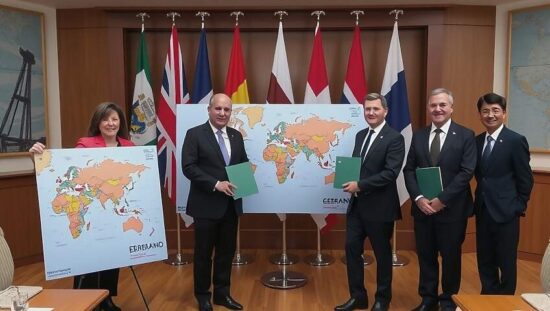
Germany, along with France, the United Kingdom, Italy, the Netherlands, and Japan, has expressed its willingness to help secure future safeguards for the Strait of Hormuz. In a joint statement issued on Thursday, the leaders said they would contribute to “appropriate efforts” to ensure safe passage through the straits and welcomed the engagement of states that are already conducting “preparatory plans”.
The specific measures that may be undertaken remain unspecified. Chancellor Friedrich Merz (CDU) has repeatedly stressed that any involvement in protecting the Hormuz waterway must wait until hostilities in the Middle East are conclusively ended.
In the same statement, the leaders condemned Iran’s recent attacks on unarmed merchant vessels in the Gulf, as well as assaults on civilian infrastructure-including oil and gas facilities-and the de facto blockade of the Hormuz strait by Iranian forces. They warned that such actions would affect people worldwide, most severely harming vulnerable populations.
The leaders cited Resolution 2817, noting that interference with international shipping and disruption of global energy supply chains threaten world peace and international security. They called for an “immediate and comprehensive moratorium” on attacks against civilian infrastructure, including oil and gas installations.
The decision by the International Energy Agency to authorise a coordinated release of strategic oil reserves was welcomed. The leaders said they would take further steps to stabilize energy markets, working with certain producing countries to increase output, and that they would strive to assist the countries most severely affected.