




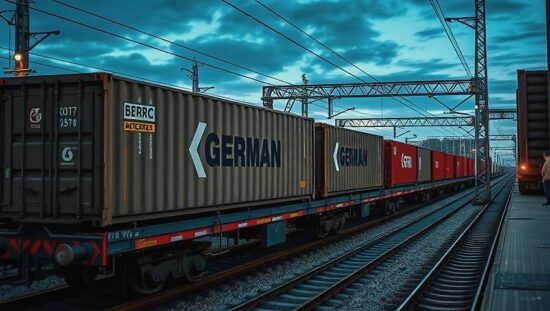
Rail freight in Germany is still in a weak phase, according to the Association of German Transport Companies (VDV). On Tuesday in Berlin, the railway industry group reported that freight volumes were around 133.9 billion ton‑kilometers, below 2016 levels. VDV president Ingo Wortmann said that the pandemic‑driven spikes have disappeared, leaving a hard intermodal competition. Other challenges include economic stagnation, higher tariffs, bureaucracy and rising costs. Short‑term decisions on rail tolls and unreliable incentive schemes are particularly problematic.
At the same time the industry sees growing network bottlenecks. The network condition has deteriorated, signal stations have been poorly rated, and construction activity has increased, affecting freight both in area and depth. The impact of the current construction and blockages is strongly felt in operations. Wortmann warned that significant additional costs arise from detours, extra traction, increased staff and vehicles. If train lengths must be reduced and staff can no longer be used efficiently, productivity falls, leading directly to revenue and profit losses.
The sector welcomes the overall direction of corridor rehabilitation, but full closures for freight are often too rigid and many bypass routes are not sufficiently upgraded. Wording the need for planning, bypass capability and fair cost‑sharing, Wortmann stressed that rail traffic requires reliability and predictability not only for construction but also to be operated effectively. The VDV has developed proposals and submitted them to policymakers, including securing bypass capacities and reviewing blockage concepts.