




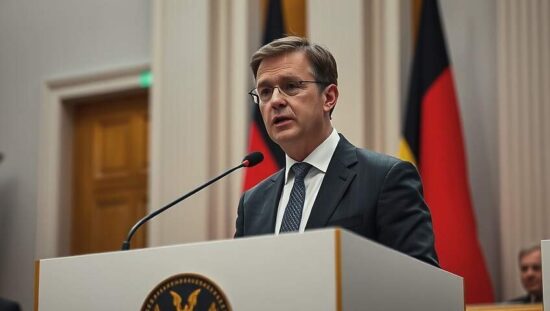
Alexander Schweitzer, the Minister-President of Rhineland‑Palatinate and member of the SPD, rejected calls to deny U.S. forces access to the Ramstein military base on the basis of international law. He said the state does not want to be pulled into the Iran conflict, but it is committed to working “in partnership” with its American allies and wants to keep foreign policy separate from internal state matters.
Schweitzer noted that U.S. troops have been stationed in Germany for decades, with several bases located in Rhineland‑Palatinate itself. “The Americans will continue to use these sites to coordinate international engagement” he told the TV channel “Welt”. “That includes cooperation related to the situation in Iran, as has repeatedly been discussed in legal contexts”. The premier emphasized that the state is a strong partner all the way down to local municipalities, and warned that anyone seeking to mix foreign policy with state policy would find no support from him.
When asked about the war itself, Schweitzer made it clear that Rhineland‑Palatinate does not intend to join the Iran war. “We must carefully consider whether to invest in military engagement, especially in light of repeated requests from the White House” he said, stressing that the state’s involvement would be subject to strict scrutiny.
Meanwhile, the CDU’s leading candidate for the state, Gordon Schnieder, dismissed the left’s demand to shut down the U.S. base at Ramstein. “It would be disastrous for our state if we no longer hosted U.S. forces” he told “Welt”. He cited the limited effect of international law in recent years, claiming it has done little to prevent Iranian terrorism. Schnieder also acknowledged that if Israel feels threatened and Iran insists on eliminating it from the map, the U.S. and Israel are entitled to act accordingly, a stance he expressed unequivocally.