




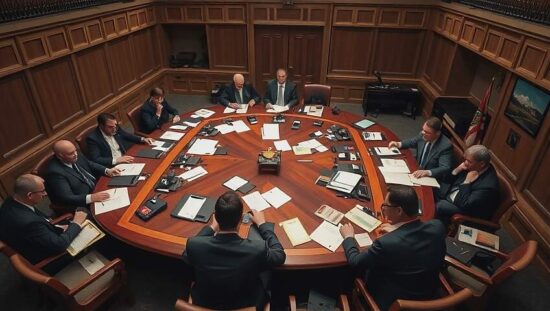
Disagreements are currently brewing within the Childhood Commission of the Bundestag regarding the upcoming six-month work plan for the committee. Specifically, the work program presented by AfD member Angela Rudzka has been rejected by other members. CDU, SPD, and Green members have accused the AfD of adopting a defensive, ‘victim’ stance.
Michael Hose, the current chair from the CDU, stated in a report to the “Rheinische Post” that he had rejected the proposed AfD work program because the party’s involvement had historically been limited and often absent from sections of the commission’s work. Hose added that experts called upon the AfD had explicitly informed him they would not be available for hearings under an AfD chairmanship. He also noted that concerns were raised about the potential for children and youth to be instrumentalized for political interests. Building on this, Hose asserted that the AfD’s attempt to present incomplete content from a closed-door meeting is merely a “staged act of victimhood” indicating that the party is not genuinely focused on advocating for children and youth’s interests.
SPD member Truels Reichardt echoed this criticism, suggesting that the AfD is misleading the public by suggesting that political marginalization is more important to the commission members than work on behalf of children and families. Reichardt argued that the AfD is simply initiating another “wave of outrage” and placing itself in a victim role. He pointed out that the AfD was completely absent from six of the total 16 commission meetings and was also absent during several other periods.
Meanwhile, Green member Nyke Slawik criticized the party for its sudden display of distress, arguing that the move came despite the AfD utilizing parliamentary bodies daily for what she described as “discriminatory and provocative propaganda”. She expressed skepticism about how the opposition could convince the other member factions to adhere to their own programs when they were actively trying to focus on the welfare of children and youth.
The Childhood Commission emphasizes its role as an advocate for children. The positions of the ordinary members fluctuate in chairing duties based on faction size. However, AfD politician Rudzka countered that the other factions were attempting to block the commission’s specialized work.