




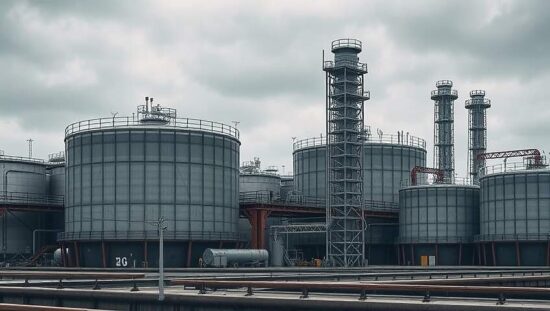
Average gas storage levels across Germany are currently at historical lows, lagging behind levels seen in previous years. On May 1st, the average storage rate was reported by the Initiative Energien Speichern (Ines), a collective of German gas and hydrogen storage operators, to be only around 26 percent. This figure mirrors the deficient levels recorded during the challenging years of 2021 and 2022.
The primary obstacle contributing to these low reserves is market timing; due to significantly high current prices, industry participants are reluctant to purchase and store gas on the commodity market. They are anticipating that prices will be considerably more favorable for bulk purchasing ahead of the winter season.
This cautious market behavior creates a significant vulnerability: while gas suppliers may possess contractual rights to delivery during the winter months, the physical supply of gas might simply not be available.
Analysis suggests the potential for serious supply shortages in extreme weather scenarios. In a severe cold climate model referencing the conditions of 2010, Ines reported that consumption shortfalls totaling 20 TWh could occur across January, February, and March 2027. In the worst-case projections, certain days might see supply shortages accounting for more than 35 percent of total required consumption.
Although the market is currently purchasing gas expected to raise storage levels to 76 percent by November 1st, the storage operators remain highly skeptical about whether this amount will prove sufficient. They caution that, as was evident last winter, a saturation level of 76 percent is only adequate if favorable weather conditions complement the stored reserves.