


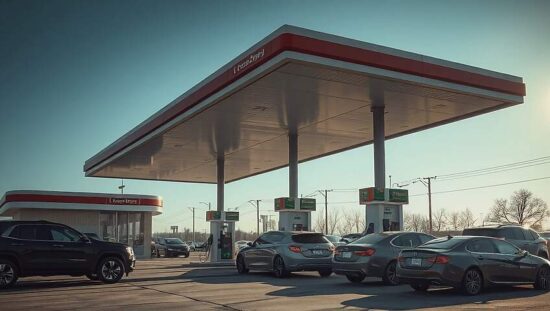
Despite recent easing on the oil markets, economic advisor Gabriel Felbermayr expects gasoline prices in Germany to remain high in the coming months. Speaking to the “Welt” (Thursday edition), Felbermayr stated that gas prices below two euros are “illusory” noting that even if the situation in the Middle East continues to calm down, “the entire system first has to find a new equilibrium”.
He pointed out that redirected shipping routes, along with uncertainties regarding insurance premiums and transit fees through the Strait of Hormuz, will continue to cause disruptions for months. Felbermayr considers a crude oil price of around $80 plausible by the end of the year, contrasting this with the $60 price seen at the beginning of the year, which he believes is not realistic anytime soon.
Currently, Felbermayr does not view state compensation for private households or the economy as necessary. However, he advises politicians to prepare instruments for a potential future price surge, urging them to consider viable solutions. He suggested that one possibility would be for the state to return additional VAT revenue, generated by rising energy prices, to its citizens, adding that “the state should not be a crisis beneficiary”.
Felbermayr welcomed the fact that the Black-Red coalition avoided launching a multi-billion euro aid package in recent weeks, a move seen in other European governments. He stated, “It is good not to immediately promise a kind of economic policy full coverage amid the first setbacks” characterizing the resistance to initial populist impulses as a positive sign.
Regarding the German economy, Felbermayr does not foresee a contraction in 2026, but anticipated that there will be ongoing strain. While growth forecasts are likely to shift downwards by some tenths of a point, he noted this is uncomfortable but not an outright collapse.
The economist expresses concern over the low levels of natural gas storage, which could once again generate significant price pressure. According to Felbermayr, if everyone waits for falling prices, the storage facilities will be filled progressively later. He warned, “There will come a point when everyone has to buy. Such panic purchases could significantly drive up prices again in the autumn, even if the acute local crisis is no longer present”.