




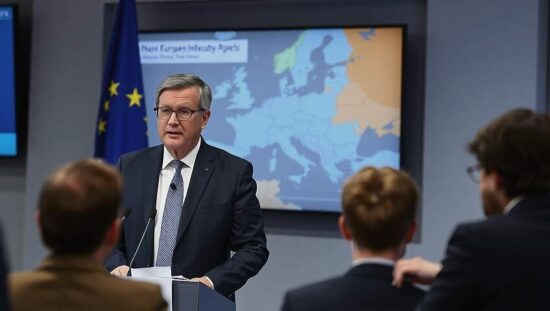
In the German federal government, willingness to adopt “Buy European” rules grows as a means to safeguard domestic economic interests. Armin Steinbach, chief economist for Finance Minister Lars Klingbeil (SPD), writes in a guest column for the Wednesday issue of “Handelsblatt” that “free trade is security‑politically blind”. He argues that a “Buy European” approach can address “critical dependencies and economic bundling risks”.
Practically, “Buy European” entails setting a minimum quota for European materials or components through policy. Although such measures were long discouraged, they are gaining traction worldwide. The United States employs them, Canada has recently introduced similar rules, and China repeatedly uses them. “Buy European” is not a unilateral provocation but a balancing act, Steinbach contends, and he supports reviewing appropriate regulations for electric‑vehicle subsidies and infrastructure projects.
Maintaining industrial capacity is also crucial for military deterrence, especially if a “vital steel industry” is deemed essential. Beyond security, Steinbach notes a climate‑political benefit: for instance, electric cars produced in Europe may emit less CO₂, factoring in transport emissions, than imports from Asia. The same logic applies to public spending-should a lead market for “green steel” be established, for example in the construction of road and rail infrastructure, it would reinforce the same principle.