


Energy Minister Katherina Reiche (CDU) announced that, in response to the energy crisis, the government must secure new oil supplies and strengthen the resilience of Germany’s fossil infrastructure, including refineries and pipelines. Speaking in the “Welt am Sonntag”, Reiche stressed the necessity of utilizing every possible option to diversify the source of raw crude oil.
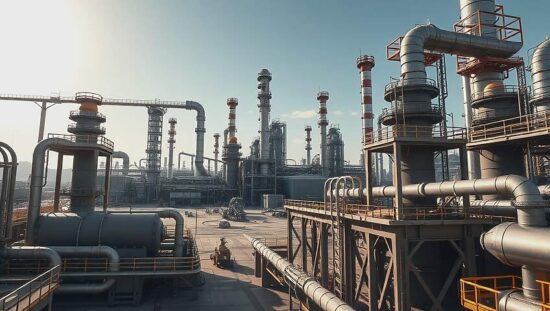
She emphasized that the reliability of refineries, supply routes, and infrastructure must be bolstered, noting that Germany’s current energy mix still relies heavily on oil and gas, accounting for roughly 60 percent. Furthermore, key industrial sectors like the chemical industry and fertilizer producers are critically dependent on oil. Therefore, Reiche stated that refineries are of “extraordinary importance” to the German economic location.
Addressing specific supply threats, Reiche confirmed that the announced Russian halt of Kazakh crude oil shipments through the Druschba pipeline to the PCK refinery in Schwedt is manageable. While she explained that such a reduction in volume would lead to a slight decrease in PCK’s production, she assured the public that the country was not left unprepared. Although the refinery is majority-owned by the Russian state corporation Rosneft, it is administered in a trust capacity by the Federal Network Agency. Reiche pointed to this as part of a larger pattern, stating, “It is not the first time that Russia has used energy as a weapon. We saw and acted accordingly during the gas supply issues”. She confirmed that efforts were already underway through discussions with Poland and Kazakhstan to secure alternative raw material sources for the refinery.
In terms of policy, the Minister firmly rejected any state expropriation of Rosneft assets. Reiche asserted that “The refineries in Germany are in private hands” warning that state seizure of individual facilities would signal instability to private operators and ultimately damage the economic location.
Finally, Reiche renewed her opposition to what she termed a “super-profit tax” a demand from her coalition partner SPD. She argued that such a tax undermines the foundation of the social market economy because it punishes any company that achieves significant success or profitability. According to her, defaming profits in this manner would strip away the economy’s primary engine, and worse, it would lead to exporting necessary gasoline-the exact opposite of the desired outcome.