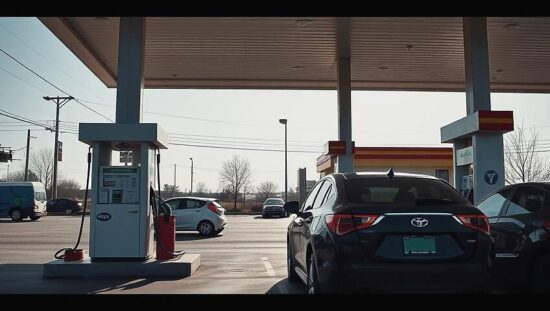


A recent study from Aachen’s RWTH Aachen University concluded that the fuel discount enacted by the federal government lacks precise targeting. According to the university’s announcement on Friday, only 8.6 percent of the government’s relief funds reach households classified as energy poor. The program costs approximately 330 million euros per month. While a household owning a combustion engine vehicle receives an average monthly relief of nearly 11 euros, a significant portion of the funds actually goes to households that do not face equivalent financial pressure, explained Karl Seeger from the Chair of Energy System Economics. This research was based on data from the Federal Statistical Office and the Socio-economic Panel. Another key finding concerns its impact on consumption habits. The discount is predicted to increase private household fuel consumption by about two percent. Given the current scarcity of crude oil imports from the Middle East, this added demand could worsen the situation and exert upward pressure on prices, according to Aaron Praktiknjo of RWTH. Therefore, the fuel discount is not an accurately targeted measure intended to support low-income households.
Gasoline Discount Misses Poor Impacting Energy Demand More