




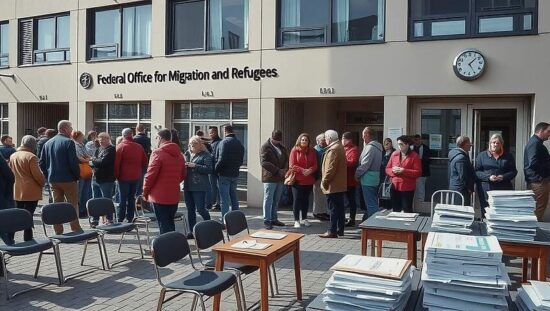
In 2025 the average duration of asylum procedures at Germany’s Federal Office for Migration and Refugees (Bamf) rose to 12.2 months, longer than it has ever been. At the same time the courts are rendering decisions in appeal cases faster, a trend highlighted in the federal government’s reply to a question from the Left MPs in the Bundestag, which the “Neue Osnabrücker Zeitung” reported.
Nearly half of all closed cases – 43.5 % – exceeded the European Union’s rule that a decision must be made within six months. For about 17 000 pending cases the maximum period allowed under EU law, 21 months, was also surpassed. “It is unacceptable that, for example, refugees from Iran have to wait an average of a year and a half for a Bamf decision” said Clara Bünger, the Left’s spokeswoman on asylum policy in the Bundestag.
The decline in average processing time for asylum appeals, which has been continuing for years, also continued in 2025. In 2021 the national average was still 26.5 months; by the end of 2025 it had fallen to 14.3 months, partly thanks to a better staffing situation in the courts. In fast‑track cases – such as those where an application is obviously unfounded – decisions are now made in just 36.5 days.
Bünger commented that asylum checks must be both swift and fair. She warned that the overall decline in protection quotas could mean that the political push for an “asylum turnaround” might negatively affect the Bamf’s decision practice. “Restrictions on the procedural rights of asylum seekers do not speed anything up and must be rolled back: there must be no second‑tier legal protection” she urged.
The Bamf completed, in record time, priority cases involving asylum seekers with low chances of recognition. Usually, these were finalized in less than a month. That aligns with the October 2023 meeting of the Minister‑Premiers’ Conference, which set a target to finish asylum procedures for applicants from countries with under‑five‑percent recognition rates in three months at both the Bamf and the courts. In these priority cases the courts rarely need more than that timeframe. However, priority cases account for only 6.6 % of all asylum procedures.
The rise in average duration can partly be explained by the temporary halt in decisions on Syrian refugees, where the average waiting time reached 14.1 months. In contrast, decisions for applicants from countries with low recognition probabilities are generally faster. Notably, refugees from Nigeria (20.4 months), Iran (17.7 months) and Iraq (17.1 months) waited especially long for a decision – and in these groups there was no decision pause.