




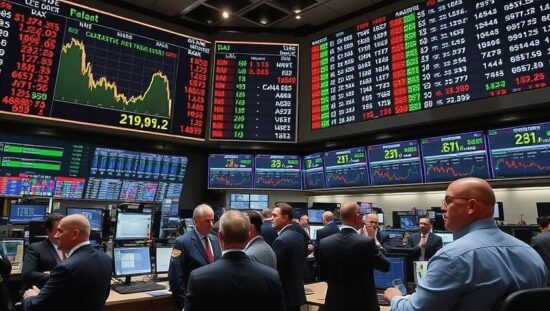
The DAX opened the trading day on Friday in a cautious mood. By 9:30 a.m. it stood at about 24,850 points, slightly below the previous day’s closing level.
Consorsbank’s chief market analyst, Jochen Stanzl, described the current situation as a neutral balance between the year’s low and the record high. He pointed out that the main factors of the still‑young 2026 market cycle – the fading Greenland risk, the withdrawal of tariff threats, and the record peak that followed the longest stretch of DAX gains – all now place the index around 24,900 points. “For the index to move above 24,900, investors will require stronger confirmation from companies that their high profit expectations for 2026 are realistic” he said. Stanzl added that the easing Greenland anxiety gives investors a chance to focus more on the upcoming earnings season.
DAX investors expect a 15 % profit growth for the 40 major German companies in 2026, an increase higher than the 13.5 % projected for the S&P 500. Given the government’s massive infrastructure and defence programs, investors anticipate a German economic comeback. However, if corporate earnings fail to meet these forecasts, current optimism could quickly shift to pessimism.
Regarding precious metals, the price of gold has moved sharply toward the $5,000 threshold. “Being present is everything now – the fear of missing a historic rally appears to be a growing driver behind the upward momentum” Stanzl noted. Gold investors are also receiving frequent positive news, most recently when the Polish central bank announced plans to acquire an additional 150 tonnes of gold. Central banks and retail investors are competing for gold, pushing prices higher. “A $5,000 gold level and $100 for silver seem to be only a matter of time” he added.
On the currency front, the euro weakened on Friday morning: 1 € equaled 1.1731 USD, while 1 USD was worth 0.8524 €. The gold price also fell, trading at $4.912 per fine ounce-a 0.5 % decline, equivalent to €134.63 per gram. Meanwhile, oil prices rose: at 9:00 a.m. German time, a barrel of North Sea Brent was $64.39, up 33 ¢ or 0.5 % from the previous day’s close.