



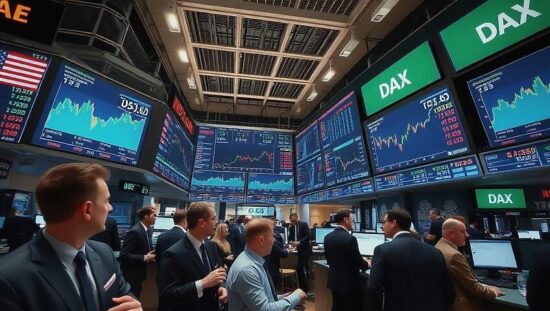
The DAX finished the week higher, closing the Xetra session at 24,901 points – an increase of 0.2 % compared with the previous day’s close.
Christine Romar, Head of Europe at CMC Markets, said the almost unstoppable rise in gold prices at least shows that investors are still taking geopolitical risks very seriously. She noted that while the customs threats that had weighed on the market in the first half of the week are now off the table, the issue surrounding Greenland remains far from resolved. According to Romar, it will only be a matter of time before Trump reaffirms his intention to fly the U.S. flag on the island. The current discussions are focused on a solution similar to the British overseas territories in Cyprus, but she doubts whether all parties could accept such an arrangement.
Romar also questioned the likelihood of renewed peace efforts in Ukraine succeeding this time. She pointed out that, despite the parties previously being closer to a lasting ceasefire than ever before, Russian attacks have not shown a significant decline, and President Putin’s claim to the Donbass region remains unchanged – facts that cast doubt on any success.
Just before market close, SAP shares led the Frankfurt price list, while the stocks of Zalando and Adidas were the weakest performers of the day.
Gas prices climbed as well: a megawatt hour of gas for delivery in February cost €40, a 4 % rise over the previous day. If this level remains stable, consumers would see a price of roughly 8 to 11 cents per kilowatt‑hour, including ancillary costs and taxes.
Oil prices also increased sharply on relative terms. A barrel of Brent crude was priced at $65.75 on Friday afternoon at 5 p.m. German time, up 2.6 % from the previous trading day’s close.
The euro was slightly stronger on Friday afternoon: one euro equaled $1.1762, meaning one U.S. dollar was worth €0.8502.